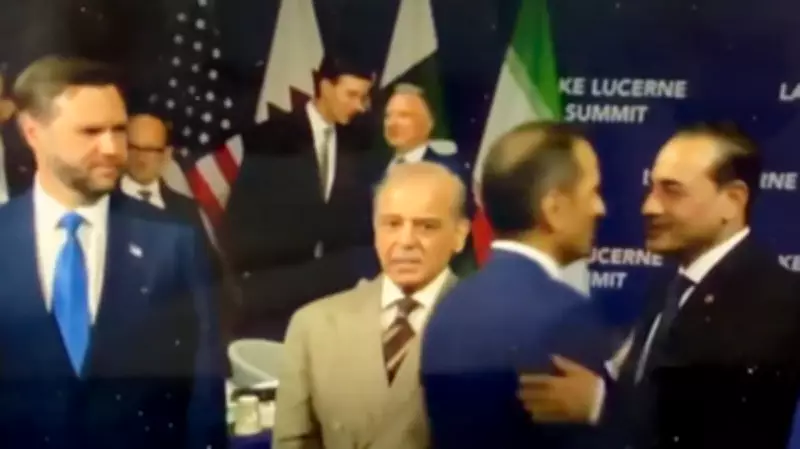
Talks between the United States and Iran in Switzerland were marked by awkward moments and diplomatic snubs, including the absence of a photo opportunity, no handshakes, and a walkout by Iranian officials. The interactions underscored the deep mistrust between the two nations as they engaged in indirect negotiations mediated by Swiss diplomats.
Awkward Start: No Handshakes or Photo Op
According to sources familiar with the proceedings, the talks began without the customary handshake between the delegations. The US team, led by Special Representative for Iran Robert Malley, and the Iranian delegation, headed by Deputy Foreign Minister Abbas Araghchi, avoided direct physical contact, reflecting the strained relations. Additionally, no joint photo opportunity was arranged, a departure from typical diplomatic engagements.
The absence of these symbolic gestures was widely interpreted as a sign of the deep-seated animosity. "The lack of a handshake or photo op is a clear indication of the current state of US-Iran relations," a diplomatic source told reporters.

Walkout Escalates Tensions
The most dramatic moment came when the Iranian delegation walked out of the talks, according to officials. The walkout occurred after the US side presented its demands regarding Iran's nuclear program. Iranian officials characterized the US proposals as "unacceptable" and accused Washington of not showing good faith. "We cannot continue negotiations under these circumstances," an Iranian diplomat stated.
The walkout left the US delegation in the room alone, with Swiss mediators scrambling to salvage the discussions. The incident highlighted the fragility of the diplomatic process aimed at reviving the 2015 nuclear deal, formally known as the Joint Comprehensive Plan of Action (JCPOA).
Details of the Talks
The talks were held in a hotel in Geneva, Switzerland, and were intended to explore a path back to compliance with the JCPOA. The US and Iran have been at odds since the Trump administration withdrew from the deal in 2018 and reimposed sanctions. Iran has since violated many of the deal's restrictions on its nuclear program.
During the discussions, the US insisted on Iran rolling back its nuclear activities before any sanctions relief. Iran, in turn, demanded the lifting of all sanctions imposed since 2018. The walkout occurred after the US refused to budge on its position. "The US team showed no flexibility," an Iranian source said.
Swiss diplomats, who have long served as intermediaries between the two countries, attempted to bridge the gap. However, the talks ended without any agreement on next steps. A Swiss spokesperson confirmed that the mediation efforts continue but declined to provide specifics.
Impact on Nuclear Deal Negotiations
The failed talks are a setback for efforts to revive the JCPOA. Analysts say the walkout and snubs could further delay negotiations. "This is not a good sign for the diplomatic track," said a nuclear nonproliferation expert. "It shows that both sides are still far apart."
The Biden administration has expressed willingness to return to the deal if Iran comes back into compliance. However, Iran has insisted on immediate sanctions relief. The stalemate has raised concerns about Iran's nuclear progress. According to the International Atomic Energy Agency (IAEA), Iran has enriched uranium to up to 60% purity, close to weapons-grade levels.
The US has warned that time is running out for diplomacy. "We remain open to talks, but Iran must demonstrate seriousness," a US State Department official said. Iran has countered that the US must first lift sanctions. The standoff continues.
Reactions and Next Steps
Following the walkout, both sides blamed each other for the lack of progress. US officials described the Iranian move as "unprofessional" and "counterproductive." Iranian state media portrayed the walkout as a strong stance against US "bullying."
There are no immediate plans for another round of talks. However, Swiss diplomats are expected to shuttle between the parties to keep channels open. The European Union, which coordinated previous negotiations, has urged both sides to return to the table.

The incident has also drawn attention to the role of Swiss mediation. Switzerland has represented US interests in Iran since 1980 and has often facilitated dialogue. "Switzerland remains committed to facilitating a peaceful resolution," a Swiss foreign ministry statement said.