

Federal Appeals Court Delivers Landmark Ruling on Ten Commandments in Texas Classrooms
A federal appeals court in the United States has issued a significant ruling that permits the state of Texas to mandate the display of the Ten Commandments in public school classrooms. The decision, delivered by the US Court of Appeals for the Fifth Circuit, came as a closely divided 9-8 split, marking a victory for conservative-backed educational policies across the nation.
Court Decision Reverses Earlier Block and Supports State Law
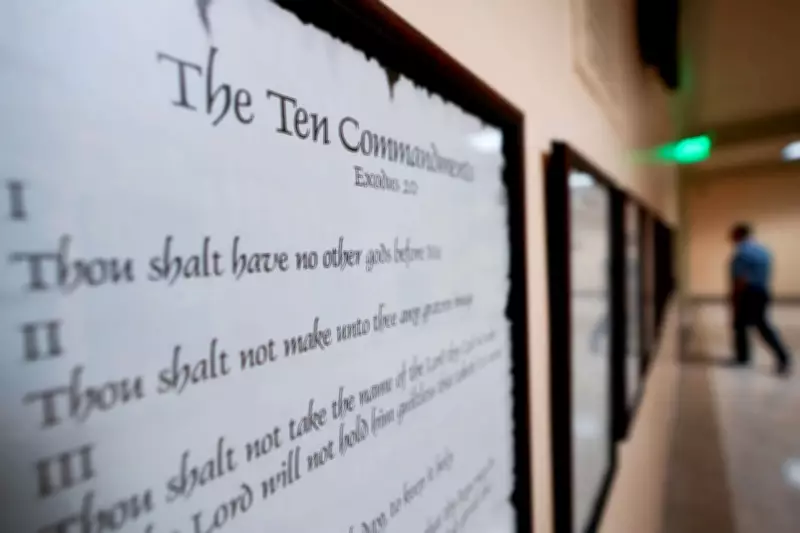
The ruling effectively overturns a previous decision by a lower federal court that had blocked several Texas school districts from displaying posters of the Ten Commandments. This allows Texas to proceed with implementing a law signed by Governor Greg Abbott, which requires public schools to exhibit donated posters of the religious text in clearly visible classroom locations. The posters must adhere to specific size and visibility standards as outlined in the legislation.
According to the Associated Press, the majority opinion emphasized that the requirement does not violate constitutional rights, stating that "students are not required to follow or recite the religious text." The ruling explicitly noted, "No child is made to recite the Commandments, believe them, or affirm their divine origin," thereby addressing concerns about religious coercion in educational settings.

Legal Challenges and Broader Implications
Legal groups, including the American Civil Liberties Union (ACLU), have strongly opposed the law. The ACLU, which challenged the policy on behalf of parents, announced plans to appeal the decision to the US Supreme Court. In a statement, the organization argued, "The First Amendment safeguards the separation of church and state, and the freedom of families to choose how, when and if to provide their children with religious instruction."
Texas officials, however, welcomed the verdict. State Attorney General Ken Paxton asserted that the ruling supports the state's position on the role of religious texts in public life, remarking, "The Ten Commandments have had a profound impact on our nation, and it's important that students learn from them every single day."
Part of a Wider Push for Religion in Classrooms
This case is part of a broader set of measures related to religion in Texas schools. In 2024, the state approved an optional curriculum that includes content from the Bible, and another proposal under consideration could introduce Bible stories into required reading lists. The appeals court had also heard arguments in a similar case from Louisiana earlier this year, allowing that state to enforce a comparable law in February.
Louisiana Attorney General Liz Murrill indicated that the Texas ruling bolsters her state's legal position, while Alabama has also passed a similar law, highlighting a trend across multiple states.
Dissent and Constitutional Concerns
The court's decision included dissenting opinions that raised significant constitutional concerns. Judge Stephen A. Higginson wrote that the law raises issues about government involvement in religion and the original intent of the Constitution's framers, underscoring ongoing debates about the separation of church and state.
Implementation and Future Legal Battles
Implementation of the Texas law varies across districts, as it applies only to public schools that choose to accept donated posters. Some school systems have already received materials, while others have issued guidance to staff on handling student questions about the displays.
As opponents prepare to challenge the ruling at the Supreme Court, the case is expected to continue, potentially setting a precedent for similar laws nationwide and shaping the future of religious expression in public education.

