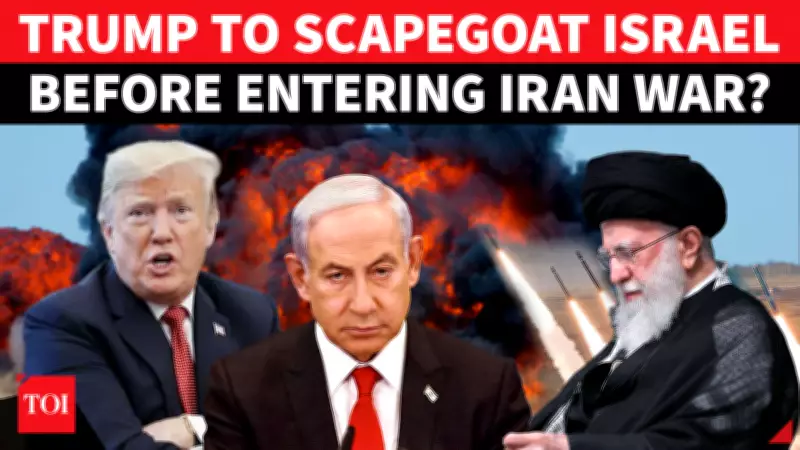
Trump Advisers Reportedly Advocate for Israeli First Strike on Iran to Influence US Public Opinion
A new report from Politico has unveiled that senior advisers surrounding former President Donald Trump are actively discussing a strategy where Israel would initiate a military strike against Iran. According to sources familiar with the matter, these officials argue that such an action could significantly bolster domestic support within the United States for subsequent American military intervention in the region.
Strategic Calculations Behind the Proposed Israeli Strike
The rationale, as detailed in the report, centers on the expectation that retaliation from Tehran following an Israeli strike would likely shift American public opinion in favor of U.S. military involvement. Advisers believe that a visible Iranian response could galvanize support, making it politically easier for the U.S. to engage in direct action. This strategy is seen as a way to navigate the complex geopolitical landscape while minimizing initial American risks.
Discussions have reportedly included the possibility of joint U.S.-Israel operations, indicating a coordinated approach despite ongoing diplomatic contacts aimed at de-escalation. However, these talks remain speculative and have not been publicly confirmed by the White House, which has maintained silence on the matter.

Concerns Over Regional Escalation and Broader Risks
Amid these discussions, significant concerns persist about the potential for regional escalation. Key worries include:
- Increased American casualties if the conflict expands beyond initial strikes.
- Strategic risks involving global powers, particularly China, which could exploit the situation to advance its interests in Taiwan.
- The broader destabilization of the Middle East, with fears of a wider war involving multiple nations.
These apprehensions highlight the delicate balance between aggressive posturing and the real-world consequences of military action. The report notes that tensions in the Middle East are already rising sharply, adding urgency to these internal deliberations.
Geopolitical Implications and Unanswered Questions
The proposed strategy underscores a broader trend in U.S. foreign policy where alliances and preemptive actions are leveraged to shape domestic and international outcomes. By potentially using an Israeli strike as a catalyst, Trump advisers aim to create a scenario that justifies American intervention, aligning with historical patterns of conflict justification.
However, the lack of official confirmation leaves many questions unanswered. How would such a strike be coordinated? What are the specific triggers for U.S. involvement? And how would other global actors, like Russia or European nations, respond? These uncertainties contribute to the volatile atmosphere currently gripping the region.
As the world watches, the interplay between military strategy, public opinion, and diplomatic efforts continues to evolve, with the Middle East remaining a focal point of global tension and intrigue.