Olympics Transforms into Political Battleground as Trump Blasts US Skier
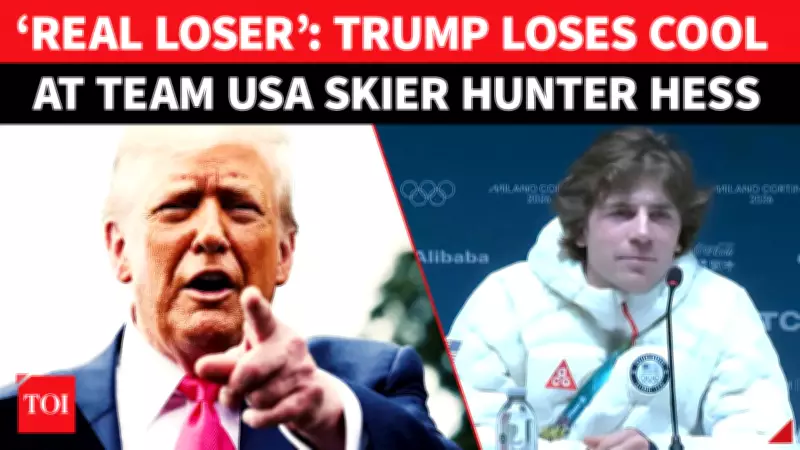
The 2026 Winter Olympics has unexpectedly morphed into a heated arena for America's culture wars, with former President Donald Trump launching a scathing attack on US freestyle skier Hunter Hess. Trump branded Hess a "real loser" on his Truth Social platform after the athlete publicly admitted to having "mixed feelings" about representing the United States given the current political climate and domestic divisions.
Controversy Ignites Fierce National Debate
This explosive exchange has triggered a fierce and multifaceted debate that extends far beyond the ski slopes. Central issues now being hotly contested include:
- The definition and expectations of patriotism for athletes on the global stage.
- The boundaries of free speech for competitors representing their country.
- Growing concerns over the safety and well-being of athletes who become targets of online abuse and public vitriol.
The United States Olympic and Paralympic Committee (USOPC) has formally acknowledged a troubling surge in abusive messages directed at Team USA members, issuing a statement warning of the negative impact on competitor mental health and performance.

Team USA Confronts Domestic Divisions
Within the Olympic Village, American athletes have been compelled to address the palpable political rifts echoing from back home. The atmosphere was further charged during the opening ceremony when Senator JD Vance, a prominent Trump ally, was met with audible boos from sections of the crowd, underscoring the deep political polarization that has infiltrated the Games.
Political leaders from across the spectrum have seized the moment to weigh in, transforming Olympic venues and coverage into an extension of the American political discourse. The incident involving Hess and Trump's reaction has become a defining flashpoint, raising critical questions about the role of politics in international sport and the pressures faced by modern athletes.
A Broader Pattern of Olympic Tension
This controversy is not isolated. It reflects a broader pattern of political tension surrounding these Winter Games. Notably, Italian Prime Minister Giorgia Meloni recently condemned rioters protesting the Olympics in Milan as "enemies of Italy," following violent street clashes involving fireworks and water cannons.
As the world watches, the 2026 Winter Olympics continues to be as much a test of political fortitude and national unity as it is of athletic prowess, with the spotlight firmly fixed on the intersection of sport, speech, and patriotism.