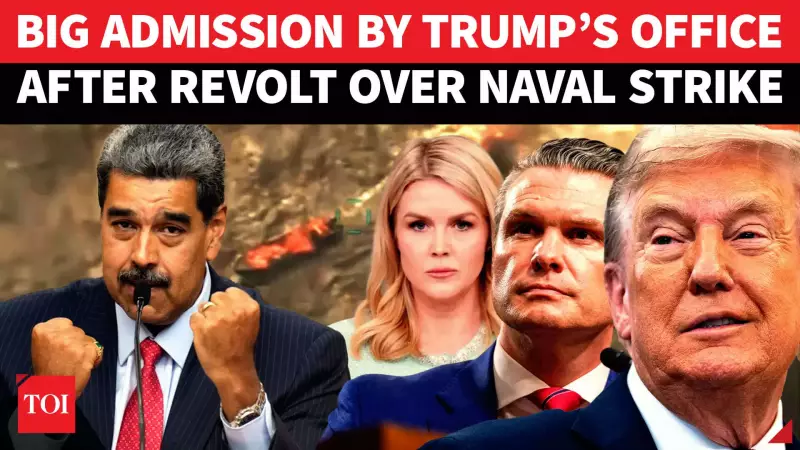
A major political controversy has engulfed Washington D.C., leading former President Donald Trump to concede to mounting pressure following explosive revelations about a U.S. military operation in the Caribbean. The incident, which occurred in September 2025, involved a strike on a vessel suspected of drug smuggling, but new claims suggest the operation was far more complex and potentially troubling.
Details of the Controversial Operation
The White House recently confirmed that the September attack on a suspected drug-smuggling ship was not a single event. According to a detailed report by The Washington Post, the operation involved more than one strike. The report alleges that a second military strike was conducted, targeting individuals who were survivors of the initial attack. This revelation has sent shockwaves through the political establishment, raising immediate and serious legal questions.
The timing of this acknowledgment, coming on December 2, 2025, has intensified the scandal. The White House and the Pentagon, under Defence Secretary Pete Hegseth, have offered starkly different responses to the allegations. While the administration maintains the operation was lawful, the implications of targeting survivors have prompted a fierce bipartisan backlash.

Bipartisan Outcry and Official Responses
The allegations published by The Washington Post have triggered a unified demand for transparency from both major American political parties. Lawmakers from across the aisle are calling for a thorough and immediate investigation into the potential war-crimes implications of the reported second strike. The legal and ethical boundaries of such actions under international law are now at the centre of a heated debate in Congress.
In a forceful rebuttal, Defence Secretary Pete Hegseth has outright dismissed the report as fabricated. He has publicly insisted that the entire operation, from planning to execution, fully complied with all U.S. laws and international regulations. The White House has echoed this defence, stating that the strike was a lawful action authorised under existing rules targeting narcoterrorism. Despite these firm denials, the calls for an independent probe continue to grow louder.
Political Fallout and Global Repercussions
The controversy has forced former President Donald Trump, a key figure often associated with the current administration's strong stance on security, to publicly address the issue. His concession to the massive opposition indicates the severity of the political firestorm. This scandal threatens to overshadow other policy agendas and has become a focal point for critics of the administration's defence and foreign policy tactics.
Beyond Washington, the incident is being closely watched by allies and adversaries alike. It touches upon sensitive themes of military accountability, the rules of engagement, and the ongoing global war against drug cartels. How the U.S. government handles this investigation could have significant implications for its moral standing and operational protocols in future international missions.
As demands for answers intensify, all eyes are on the next steps from Congress and the Pentagon. The outcome of this probe could redefine the limits of military action in similar scenarios and set a crucial precedent for future operations conducted under the banner of combating narcoterrorism.