

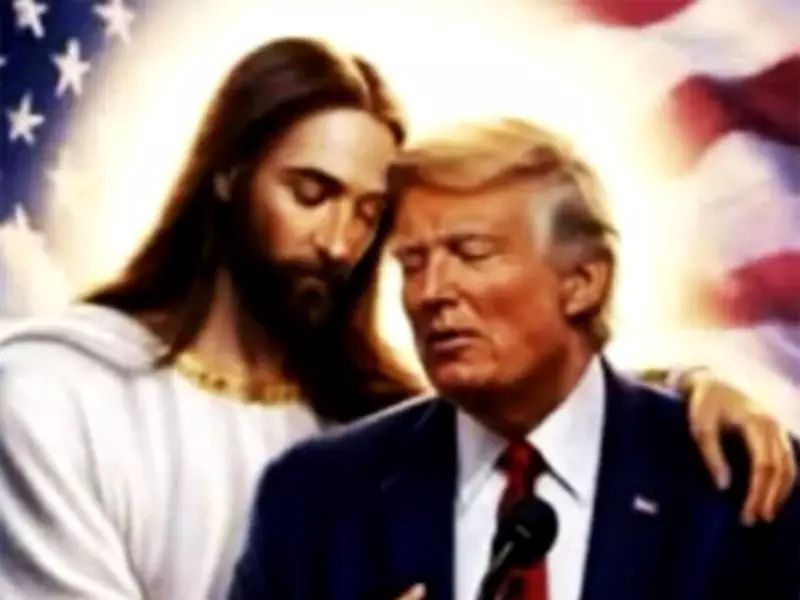
Trump Condemns 'Radical Left Lunatics' Over Viral AI-Generated Image
Former United States President Donald Trump has publicly criticized what he termed 'radical left lunatics' in response to a widely circulated artificial intelligence-generated image that depicts Jesus Christ embracing him. The image, which has gone viral across various social media platforms, shows a photorealistic rendering of Jesus with his arms around Trump, a visual that has sparked significant online debate and controversy.
'Quite Nice' but Politically Charged
In his remarks, Trump described the AI-generated depiction as 'quite nice', acknowledging the technical quality and emotional resonance of the image. However, he quickly pivoted to a sharp political critique, attributing the creation and dissemination of the image to his ideological opponents. 'It's just another example of the radical left trying to manipulate and distort things for their own agenda,' Trump stated, emphasizing his view that the image is part of a broader pattern of political attacks.
Context and Reactions
The emergence of this AI image comes at a time of heightened political tensions in the United States, particularly as the country approaches another election cycle. Key aspects of this development include:

- Technological Implications: The use of advanced AI tools to create politically charged imagery raises questions about misinformation and digital ethics.
- Political Divide: Trump's comments highlight the deep partisan rifts in American politics, with such images often fueling further polarization.
- Public Response: Online reactions have been mixed, with some users praising the image as symbolic of faith and support, while others criticize it as inappropriate or manipulative.
This incident underscores the growing intersection of technology and politics, where AI-generated content can quickly become a focal point for national discourse. As AI tools become more accessible, experts warn that such images could be used more frequently to influence public opinion or spread disinformation, necessitating greater awareness and critical media literacy among the populace.

