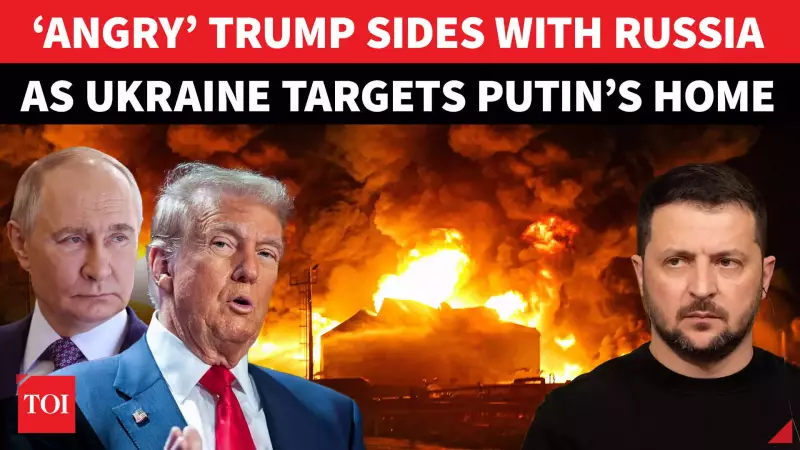
Former US President Donald Trump has publicly declared he is "very angry" following reports that Ukrainian forces attempted a drone strike on a state residence connected to Russian President Vladimir Putin. The incident, which occurred in the Novgorod region, has injected fresh tension into already delicate diplomatic efforts to end the war.
Trump's Fury and Putin's Early Morning Call
Speaking from his Mar-a-Lago estate in Florida on December 30, 2025, while hosting Israeli Prime Minister Benjamin Netanyahu, Trump revealed the details. He stated that President Vladimir Putin personally informed him about the attack in an early morning call. Trump emphasized the sensitivity of the moment, warning that targeting a leader's personal residence was "not the right time," especially amidst ongoing peace negotiations.
"I'm very angry about it," Trump said, clearly agitated by the briefing he received. His comments underscore the direct line of communication he maintains with the Russian leader and his self-styled role as a mediator in the conflict.

Kyiv and Moscow Trade Accusations
The Russian government was quick to accuse Ukraine of attempting to sabotage potential peace talks with the daring attack. Kremlin officials framed the incident as a deliberate provocation aimed at derailing diplomacy.
However, Ukrainian President Volodymyr Zelensky swiftly dismissed the Russian narrative. He labeled the entire report a "fake story" and accused Moscow of spreading lies. This firm denial from Kyiv sets the stage for another bitter round of accusations and counter-accusations, further eroding trust between the warring nations.
Broken Diplomacy and a Security Deal Controversy
This drone incident is not the only source of strain. The report comes against a backdrop of other friction points in Ukraine's relations with its allies. Recently, Trump has been criticized for what some call the humiliation of President Zelensky by offering Ukraine a security guarantee lasting only 15 years, far short of the 500-year pact Kyiv reportedly sought.
Furthermore, Russia has vowed severe retaliation for the alleged attack on its president's home. Russian defense officials claimed to have destroyed 91 drones in recent engagements, signaling a heightened state of alert and a promise of forceful response.
The convergence of these events—the alleged attack, the contentious security offer, and the threats of revenge—paints a picture of diplomacy under extreme pressure. With key players expressing anger, issuing denials, and making threats, the path to peace appears more complicated and fragile than ever.