

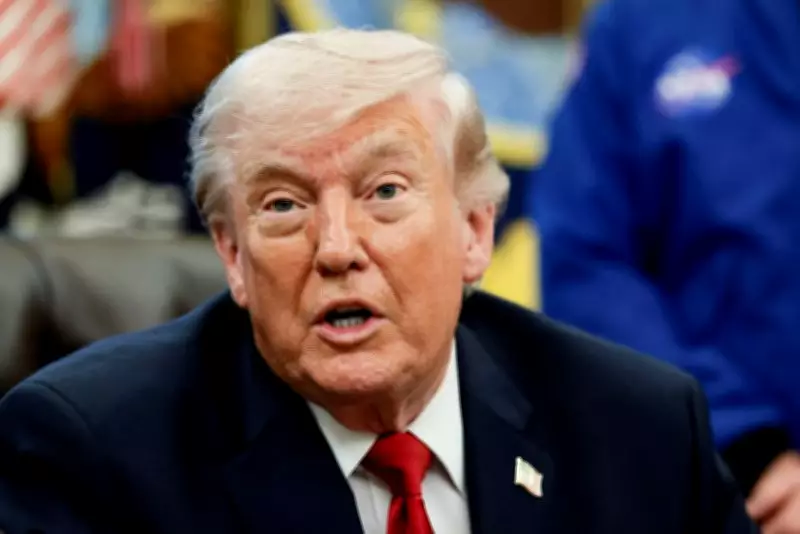
Former President Donald Trump has stated in an interview with Fortune magazine that he should have requested a larger stake in Intel Corporation during his tenure. Trump expressed regret over not pushing for a more significant ownership position in the American chipmaker, criticizing the current administration's approach to semiconductor manufacturing.
Trump's Criticism of CHIPS Act
In the interview, Trump reiterated his disapproval of the CHIPS and Science Act, which was signed into law by President Joe Biden in 2022. The legislation provides $52.7 billion in subsidies for semiconductor production and research in the United States. Trump argued that instead of grants, the government should impose tariffs on foreign-made chips to encourage domestic production. He claimed that tariffs would be more effective in reviving the U.S. chip industry without costing taxpayers money.
Advocacy for Tariffs
Trump emphasized his preference for tariffs over subsidies, stating that a 10% tariff on imported semiconductors would generate revenue while incentivizing companies to build factories in the U.S. He criticized the Biden administration for offering handouts to companies like Intel, which has received significant funding under the CHIPS Act. Trump said, "I would have asked for a bigger piece of the company. They gave them money, but they didn't get enough in return."

Intel's Position
Intel is a major beneficiary of the CHIPS Act, having been awarded up to $8.5 billion in direct funding and $11 billion in loans for its expansion projects in Arizona, Ohio, and other states. The company is also eligible for a 25% investment tax credit. Trump's comments come as Intel faces challenges in its turnaround efforts, including delays in its advanced manufacturing roadmap and increased competition from rivals like TSMC and Samsung.
Reactions and Implications
Industry analysts have noted that Trump's suggestions could reshape the semiconductor landscape if implemented. Tariffs might protect domestic manufacturers but could also raise costs for consumers and disrupt global supply chains. The former president's remarks highlight ongoing debates about the best strategies to bolster U.S. chip production and reduce reliance on Asian suppliers.
Trump's interview with Fortune also touched on other topics, including his views on trade with China and the importance of national security in technology. He stressed that the U.S. must prioritize self-sufficiency in critical sectors like semiconductors to maintain its global leadership.

