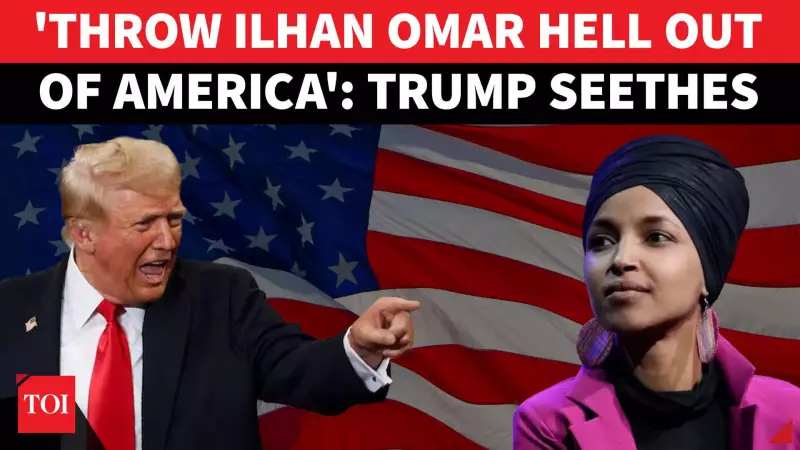
In a dramatic escalation of political rhetoric, President Donald J. Trump has ignited a major controversy by demanding that Congresswoman Ilhan Omar be removed from the United States. The incendiary comments were made during an informal press interaction on December 1, 2025, while he was aboard Air Force One.
Trump's Fiery Remarks Aboard Air Force One
Departing from his prepared script, President Trump launched a sharp verbal assault on the Democratic lawmaker from Minnesota. He stated unequivocally that Ilhan Omar should be "thrown the hell out of our country." The President linked his criticism to Somalia, which is among the 19 nations whose visa programs are currently under scrutiny. This review was initiated following the tragic shooting of two National Guardsmen in Washington D.C.
Trump did not limit his criticism to Omar alone. He revisited his past disparagement of Minnesota Governor Tim Walz, confirming to reporters that he stood by his previous characterization of the governor. He further argued that any official authorizing substantial financial aid to Somalia must have "something wrong with them."

The Stunning Suggestion on Citizenship
The conversation took an even more consequential turn when journalists pressed the President on the rights of naturalised American citizens. When asked if citizenship could be revoked after it has been granted, Trump suggested it might indeed be possible. He specifically targeted individuals who were naturalised "through Biden," implying a politicization of the process under the previous administration.
President Trump asserted that, given the authority, he would not hesitate to initiate de-naturalisation proceedings against individuals he perceives as a threat to the nation. This remark opens a profound legal and constitutional debate about the permanence of citizenship in the United States.
Implications and Fallout
These off-the-cuff remarks from the President are certain to trigger a fierce political and public backlash. Targeting a sitting member of Congress with calls for deportation breaks established norms and sets a new precedent for political discourse. The suggestion that citizenship can be retroactively stripped from naturalised Americans challenges a fundamental pillar of the country's immigration system.
The incident highlights the deeply polarized state of U.S. politics, where personal attacks and questions of patriotism continue to dominate the national conversation. The fallout from these comments is likely to resonate for weeks, influencing debates on immigration, national security, and the very meaning of American identity.