Trump Announces New 10% Global Tariff After Supreme Court Rejects His Trade Agenda
The United States Supreme Court has delivered a significant blow to President Donald Trump's economic agenda, striking down his sweeping global tariffs in a 6–3 ruling. This decision marks a major setback for the administration's trade strategy, which has been a cornerstone of its policy platform.
Trump's Furious Reaction to the Court's Ruling
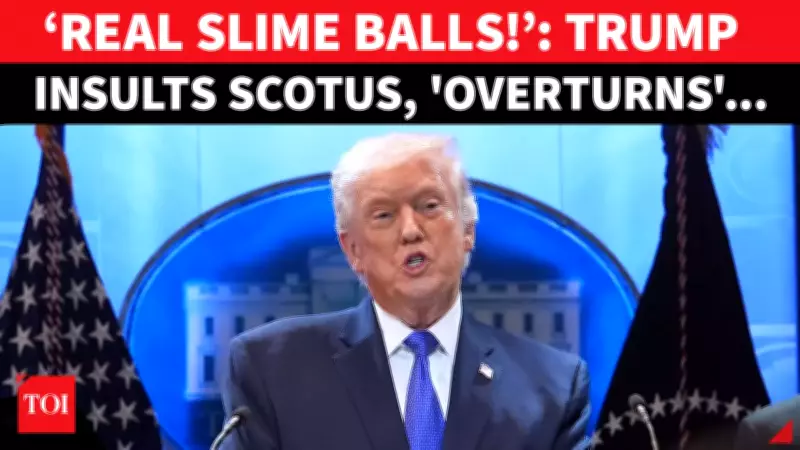
In response to the ruling, President Trump expressed intense frustration, blasting the justices involved. He described the decision as "deeply disappointing" and stated he was "absolutely ashamed" of those who voted against him. This public outburst highlights the high-stakes nature of the clash between the White House and the judicial branch.
The president's reaction underscores the personal and political dimensions of this legal battle, as he views the ruling as a direct challenge to his authority and policy goals.

New Tariff Plan Under Alternative Law
Despite the Supreme Court's rejection, Trump is not backing down. He has announced plans to implement a new 10% global tariff using an alternative legal framework. This law allows for such measures but limits their duration to 150 days, providing a temporary avenue for the administration to pursue its trade objectives.
By leveraging this provision, Trump aims to circumvent the Court's ruling and continue advancing his protectionist trade agenda, albeit on a more constrained timeline.
Implications for Executive Power and Trade Future
This confrontation sets the stage for a renewed political and legal battle over the limits of executive power in shaping America's trade policies. The Supreme Court's decision reinforces judicial oversight on presidential trade actions, while Trump's move to impose new tariffs tests the boundaries of that oversight.
The outcome of this clash could have lasting effects on how future administrations approach trade negotiations and tariff implementations, influencing both domestic economic strategies and international relations.
As the situation unfolds, stakeholders from various sectors are closely monitoring developments, anticipating potential impacts on global markets and diplomatic ties. The 150-day limit on the new tariff adds urgency to the debate, ensuring that this issue will remain at the forefront of political discourse in the coming months.