

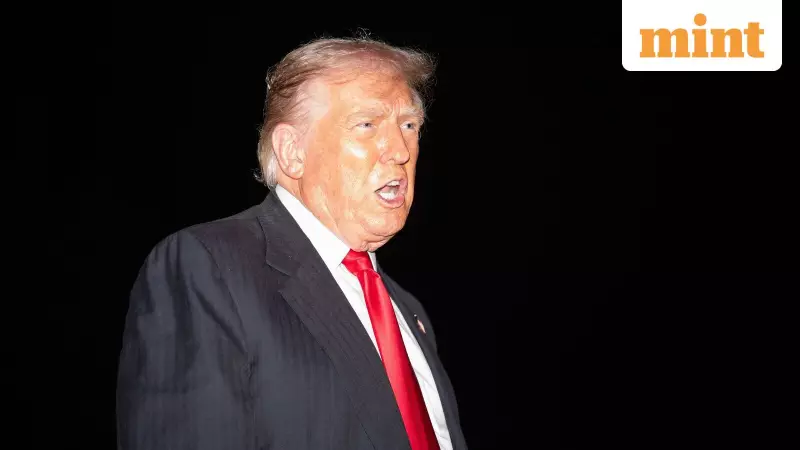
Former US President Donald Trump has launched a massive legal offensive against the British Broadcasting Corporation, demanding a staggering $1 billion in damages. The legal threat comes in response to a Panorama documentary that Trump claims manipulated his January 6, 2021 speech to suggest he incited violence.
The Billion Dollar Legal Threat
Through his attorney Alejandro Brito, Trump has sent a formal legal notice to the BBC that could escalate into one of the most significant defamation cases in media history. The notice accuses the broadcaster of creating "malicious, disparaging" edits of Trump's address delivered on the day of the US Capitol riot.
The legal document, as reported by New York Times, claims the BBC deliberately altered the meaning of Trump's speech to imply he explicitly called for violence. Brito's letter demands nothing less than a complete retraction, public apology, and substantial financial compensation for what he describes as severe reputational damage to the former president.

Explosive Legal Demands
The legal warning contains some of the strongest language seen in media dispute cases. It explicitly states that Trump will be "left with no alternative but to enforce his legal and equitable rights" if the BBC fails to comply with his demands.
The document reserves all of Trump's legal rights and specifically mentions filing legal action for "no less than $1,000,000,000 (One Billion Dollars) in damages." This represents one of the largest financial demands ever made against a media organization by a political figure.
In a particularly striking conclusion, the letter warns: "The BBC is on notice. PLEASE GOVERN YOURSELF ACCORDINGLY." This formal legal language carries the weight of an impending lawsuit that could have far-reaching implications for media standards worldwide.
Broader Implications for Media and Politics
This legal confrontation places the ongoing debate about media representation and political speech at center stage. The case touches upon fundamental questions about:
- Editorial discretion in political coverage
- The boundaries of documentary filmmaking
- Legal protections for media organizations
- Political figures' rights to control their public image
The timing is particularly significant as it comes amid broader discussions about media ethics and the representation of political events. The January 6 Capitol riot remains one of the most contentious events in recent American history, and how it's portrayed in media continues to generate intense debate.
This legal notice represents an escalation in Trump's ongoing battles with media organizations and could set important precedents for how political speeches are edited and presented in documentary formats. The outcome may influence how media organizations worldwide approach political content editing in the future.






