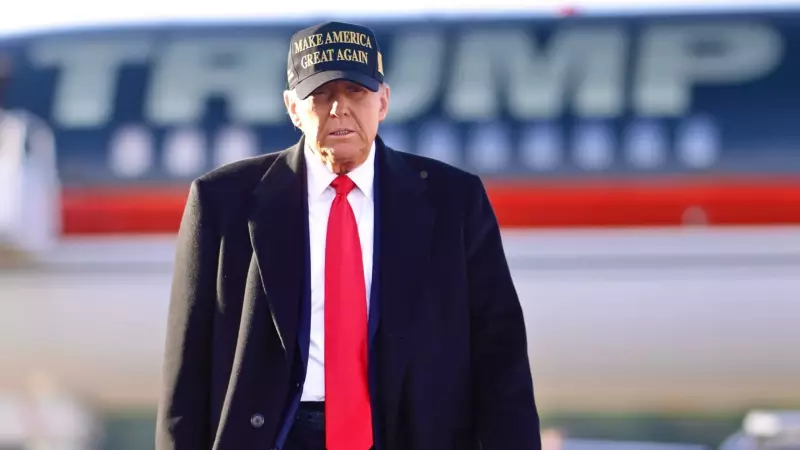
In a bold declaration that intensifies the political battle ahead of the 2024 US presidential election, former President Donald Trump has vowed to terminate and revoke all pardons and sentence commutations signed by his successor, President Joe Biden, using an autopen device. Trump labelled these acts as "illegitimate," setting the stage for a potential constitutional and legal clash should he return to the White House.
The Core of Trump's Controversial Pledge
Trump made this significant announcement during a recent speech in Wisconsin, a key battleground state. He specifically targeted the procedural method used by the Biden administration for certain clemency actions. An autopen is a machine that replicates a person's signature, and its use for official presidential actions like pardons has been a point of contention in the past.
The former president argued that the use of such a device, rather than a pen personally held by President Biden, renders the pardons invalid. "He used an autopen. That means it's not even him. It's a machine," Trump stated, framing the issue as one of legitimacy and personal responsibility. This pledge is part of Trump's broader campaign rhetoric, where he frequently promises to overturn many policies and decisions of the Biden administration.

Historical Context and Legal Ambiguity
The use of autopens for presidential orders is not unprecedented. Previous administrations, including those of Barack Obama and George W. Bush, have utilized the device for various documents. However, its application for the weighty constitutional power of clemency remains a legally grey area.
Critics and legal scholars are divided. Some argue that as long as the president clearly authorizes and intends the action, the mechanism of signing is secondary. Others contend that the solemn act of granting mercy, rooted in tradition, requires the president's direct, physical endorsement. Trump's promise directly exploits this ambiguity and appeals to his base's perception of Biden's leadership style.
It is crucial to note that President Biden has also issued numerous pardons and commutations by hand. Trump's pledge, however, creates a sweeping category for potential reversal based solely on the signing method, a move without modern precedent.
Potential Repercussions and Political Firestorm
If Donald Trump were to win the November 2024 election and follow through on this promise, it would trigger an immediate and fierce legal and political confrontation. The power to grant clemency is explicitly granted to the president by the US Constitution. The question of whether a subsequent president can nullify a predecessor's pardons is largely untested in courts.
Such an action could plunge individuals who received clemency via autopen into legal limbo, potentially forcing them back to prison or reinstating their criminal records. This would have profound human consequences and ignite a debate about the finality and nature of presidential pardon powers.
Furthermore, this pledge adds another layer of intensity to an already highly charged election cycle. It positions Trump as a president intent on active retribution and dismantling his opponent's legacy, far beyond typical policy reversals. The statement serves as a powerful rallying cry for his supporters while presenting a stark warning to those who have benefited from Biden's clemency decisions.
As the campaign trail heats up, this issue is likely to resurface, prompting discussions on executive authority, the integration of technology in governance, and the limits of presidential power. The world will be watching to see if this campaign promise becomes a contentious reality.