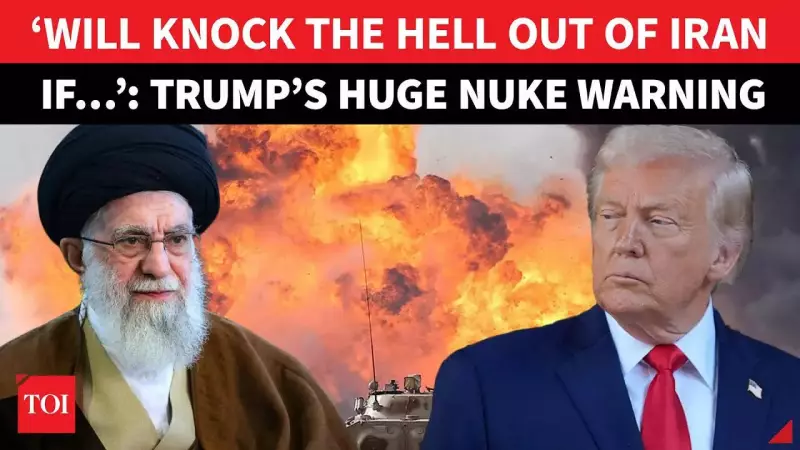
Former US President Donald Trump has delivered a blunt and forceful warning to Iran, stating that the United States would take drastic military action if Tehran attempts to rebuild its nuclear weapons programme. This stark message was delivered during high-stakes discussions with Israeli Prime Minister Benjamin Netanyahu at Trump's Mar-a-Lago estate in Florida.
Mar-a-Lago Meeting: A Stark Ultimatum to Tehran
The talks, held on December 30, 2025, saw Trump explicitly threaten to "knock the hell out of" Iran should it move to reconstitute its nuclear capabilities. While emphasising that he is not actively seeking to overthrow the Iranian regime, the former President made it clear that any development of nuclear weapons or advanced missile systems would be met with swift and overwhelming American force. This posture reinforces his long-standing "maximum pressure" stance towards the Islamic Republic.
Broad Agenda: From Gaza Ceasefire to Hamas Disarmament
The conversation between the two leaders covered a wide range of critical regional security issues. A key topic was the progression to a second phase of the Gaza ceasefire, alongside strategies for the complete disarmament of the Hamas militant group. Trump once again praised Netanyahu's leadership amidst the Israeli leader's domestic political challenges, and publicly supported calls for a pardon in Israel, a nod to Netanyahu's ongoing legal battles.

The meeting served as a crucial preparatory session for Netanyahu, who is scheduled for pivotal talks in Washington, D.C. The alignment between the potential future US administration and Israel on the Iran threat is seen as a significant geopolitical signal to the region and the world.
Regional Repercussions and the Path Forward
Trump's unequivocal threat escalates the already tense standoff with Iran and casts a shadow over any potential diplomatic efforts to revive the dormant nuclear deal. By coupling this warning with discussions on Gaza and Hamas, the talks underscore a comprehensive approach to Middle Eastern security from Trump's perspective, one that closely intertwines the threats posed by Iran and its proxy networks.
This development places Iran's next moves under intense international scrutiny and sets a potentially volatile precedent for US foreign policy in the region, should Trump return to power. The explicit nature of the warning leaves little room for ambiguity, marking a clear red line for Tehran's nuclear ambitions.