Trump Stands Firm on Tariffs, Says Partners Favor Deals Post-Court Ruling
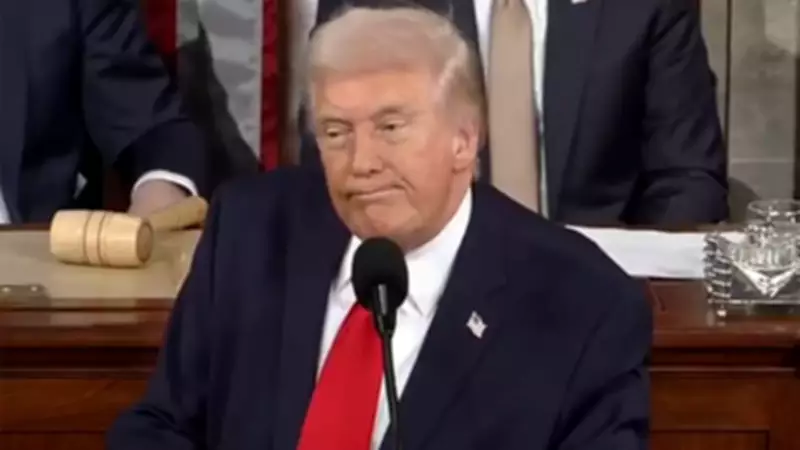
In a bold address to a joint session of Congress during his 2026 State of the Union speech, former President Donald Trump made a striking claim: the majority of the United States' trading partners are eager to uphold the trade arrangements negotiated under his tariff policies, even in the wake of a recent Supreme Court decision that invalidated many of those measures.
Tariffs as a Potential Replacement for Income Taxes
Trump reiterated his controversial stance that tariff revenue could eventually supplant the current income tax system. "Congressional action will not be necessary," he declared. "As time goes by, I believe the tariffs, paid for by foreign countries, will, like in the past, substantially replace the modern day system of income tax." This statement underscores his long-held belief in leveraging trade policies for domestic fiscal restructuring.
Criticism of Supreme Court Ruling
Addressing the Supreme Court's ruling issued just four days prior, which found that he had exceeded his presidential authority in imposing sweeping tariffs on imports, Trump labeled it an "unfortunate ruling." However, he offered a silver lining: "The good news is that almost all countries and corporations want to keep the deal that they already made." He argued that these entities fear a new deal under his potential future presidency could be "far worse for them," prompting them to continue on the "same successful path" negotiated before the court's intervention.

The high court's decision, delivered by a 6–3 majority with Chief Justice John Roberts and Justices Amy Coney Barrett and Elena Kagan in support, struck down several of Trump's tariffs. In response, Trump swiftly imposed a new 10% duty under a different law, effective immediately, with plans to raise it to 15%. He described these temporary tariffs, set to last 150 days unless extended by Congress, as a step toward a "stronger long-term solution."
Economic Justifications and Counterarguments
Trump credited tariffs for what he called the "stunning economic turnaround," citing milestones like the Dow Jones breaking 50,000 and the S&P hitting 7,000 ahead of schedule. "I used these tariffs, took in hundreds of billions of dollars to make great deals for our country, both economically and on a national security basis," he asserted. He claimed that countries previously "ripping us off" are now paying substantial sums, leading to mutual satisfaction, no inflation, and tremendous growth, while criticizing 22 Nobel Prize-winning economists for getting their predictions "totally wrong."
Contrasting this view, a New York Federal Reserve paper released this month found that nearly 90% of the economic burden from tariffs fell on US firms and consumers, highlighting ongoing debates about their impact. As the United States marks its 250th anniversary in 2026, commemorating independence from Great Britain, Trump's remarks add to the national discourse on economic policy and governance.