

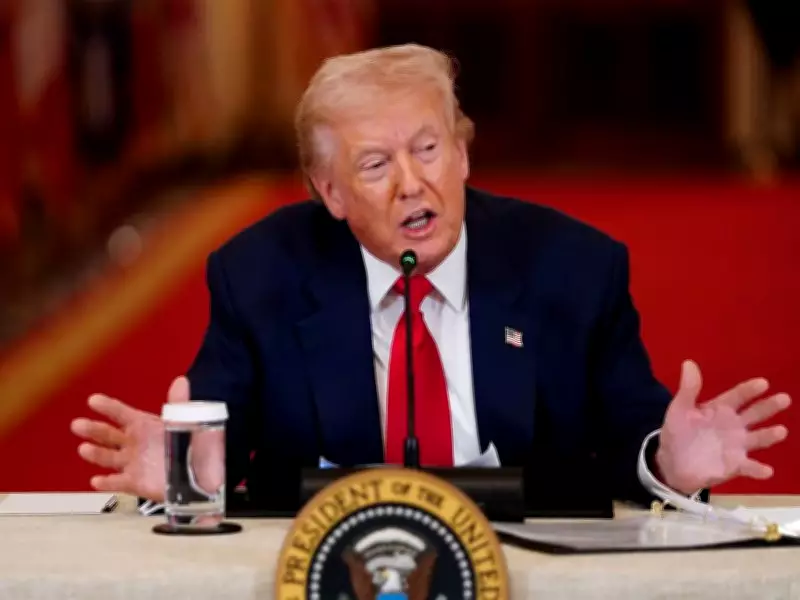
Trump Issues Stern Warning to NATO Allies Over Strait of Hormuz Support
In a recent telephone interview with the Financial Times, US President Donald Trump delivered a blunt message to European allies, suggesting that the future of the North Atlantic Treaty Organization (NATO) could face a "very bad" outlook if member nations do not assist in securing the Strait of Hormuz. The interview, published on Sunday, highlighted Trump's expectations for shared responsibility in protecting this critical maritime passage.
Call for Burden-Sharing in Maritime Security
President Trump emphasized that nations benefiting from the Strait of Hormuz must contribute to its protection. "It's only appropriate that people who are the beneficiaries of the Strait will help to make sure that nothing bad happens there," he stated. He further cautioned that a lack of response or a negative response from allies would be detrimental, adding, "if there's no response or if it's a negative response, I think it will be very bad for the future of NATO."
Comparison to Previous Support for Ukraine
Trump drew a comparison to American support for Ukraine during its conflict with Russia, noting, "We didn't have to help them with Ukraine. Now we'll see if they help us because I've long said that we'll be there for them, but they won't be there for us." This remark underscores his ongoing criticism of what he perceives as unequal contributions within the alliance.

Specific Demands and Expectations
When questioned on the nature of assistance required, Trump indicated he expects "whatever it takes," including the deployment of minesweepers to the region. He reiterated these expectations while returning to the White House from Florida, stating aboard Air Force One, "We're always there for NATO. It'd be interesting to see what country wouldn't help us with a very small endeavour, which is just keeping the Strait open."
Focus on Iranian Threats and International Cooperation
The President also suggested that international partners could assist in neutralizing threats originating from the Iranian coast. He expressed a desire for "people who are going to knock out some bad actors that are along the shore," in reference to Iranian units utilizing naval mines and drones in the Gulf. This highlights the broader geopolitical tensions in the region.
Criticism of UK and NATO Dynamics
Trump expressed dissatisfaction with British Prime Minister Keir Starmer regarding the lack of immediate UK backing for recent US-Israeli military actions against Iran. "The UK might be considered the No. 1 ally, the longest-serving, etc., and when I asked for them to come, they didn't want to come," he said, mentioning a conversation held with Starmer earlier on Sunday. He criticized the timing of the British offer, stating, "And as soon as we basically wiped out the danger capacity from Iran, they said, 'Oh, well we'll send two ships,' and I said, 'We need these ships before we win, not after we win.' I've long said that NATO is a one-way street."
This warning comes amid ongoing debates about NATO's role and the distribution of responsibilities among its members, particularly in non-traditional security operations beyond its North American and European focus.






