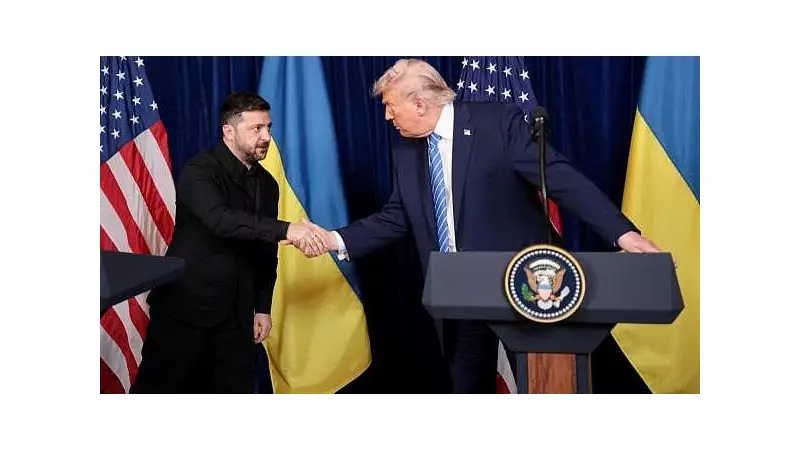
In a significant diplomatic development, former US President Donald Trump and Ukrainian President Volodymyr Zelenskyy held crucial talks in Florida on December 29, 2025. The meeting, described as "great" by Zelenskyy, has injected fresh momentum into stalled efforts to end the protracted Russia-Ukraine conflict. Both leaders struck an optimistic note, with Trump revealing that Russia and Ukraine were "maybe very close" to reaching a deal.
Core Proposals and Security Frameworks Discussed
The discussions in Florida centred around a detailed 20-point peace proposal, which is now at the heart of negotiations to conclude the war. A major pillar of Ukraine's stance, reiterated by Zelenskyy, is the country's future membership in the European Union, viewed as a core security guarantee against future aggression.
On the bilateral front, the United States proposed a formal US-Ukraine bilateral security pact. This agreement is intended to provide long-term assurances to Kyiv. Notably, American officials are reportedly seeking a formula that stops short of demanding a full Russian "withdrawal" from all contested territories, indicating a potential compromise framework.

Diverging Views on Critical Infrastructure
A point of discussion involved the sensitive issue of the Zaporizhzhia Nuclear Power Plant, currently under Russian control. The US side floated the idea of establishing joint control of the nuclear plant as part of a settlement. However, Kyiv presented a counter-proposal, suggesting instead a US-Ukraine joint venture to manage the facility, highlighting ongoing negotiations over the status of critical infrastructure.
Implications and the Path Forward
The Florida summit marks the most substantial high-level contact between Trump and Zelenskyy in recent months, breaking a period of diplomatic inertia. The publicly stated optimism from both leaders suggests backchannel talks may have progressed further than previously known. The focus on a specific 20-point plan indicates that negotiations have moved beyond general principles to concrete, actionable items.
However, the differing approaches on issues like the security pact's conditions and the nuclear plant's management underscore the complex hurdles remaining. The world will now watch closely to see if this newfound momentum from the December 29 meeting can be translated into a durable and just peace agreement, ending Europe's largest land conflict in decades.