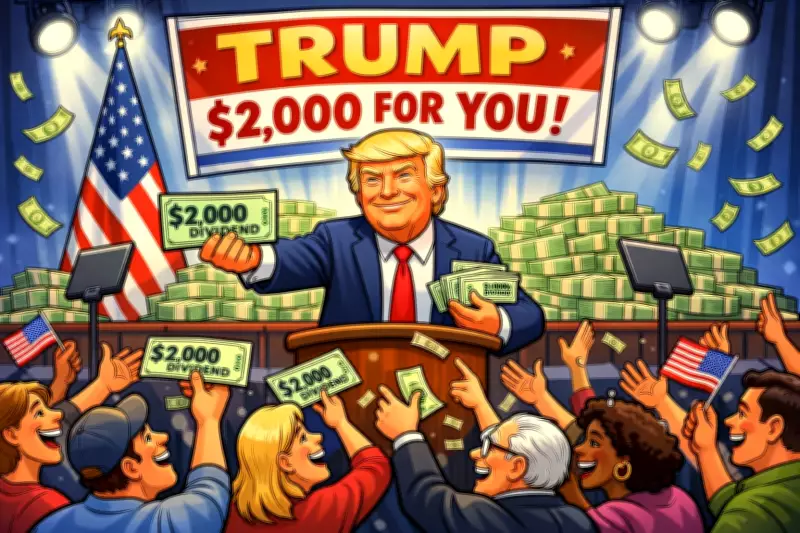
Trump Advocates for $2,000 Direct Payments to Americans Using Tariff Funds
In a recent statement, former US President Donald Trump reiterated his proposal for a substantial financial benefit to American citizens, suggesting that a $2,000 payment could be distributed directly to individuals. He emphasized that this initiative would be financed through tariff revenues collected by the government, potentially without requiring approval from Congress.
Strong Tariff Collections Cited as Basis for Dividend Plan
Addressing reporters, Trump pointed to robust tariff collections as the foundation for his proposal. He asserted that these revenues have created sufficient financial flexibility to consider direct payments to Americans while simultaneously contributing to reducing the national debt. When questioned about the necessity of congressional approval for such a move, Trump responded ambiguously, stating, "I don't think we would have to go to Congress, but, you know, we'll find out."
He elaborated further, explaining, "The reason we're even talking about it is that we have so much money coming in from tariffs that we'll be able to issue at least a $2,000 dividend and also pay down debt for the country." Trump added that the payments would likely include an income limit to ensure they are targeted appropriately, but he expressed confidence in implementing the plan independently of legislative input.

Supreme Court Ruling Challenges Tariff Framework and Dividend Feasibility
These remarks follow a significant legal setback for Trump's tariff policies. The US Supreme Court delivered a ruling in the case Learning Resources, Inc. vs Trump, deciding by a 6-3 margin that the president does not possess the authority under the International Emergency Economic Powers Act (IEEPA) to impose broad tariffs. This decision invalidated tariffs introduced under that law, including measures labeled as "Liberation Day" tariffs, and has complicated the proposed $2,000 "tariff dividend."
The financial implications of this ruling are substantial. According to economists at the Penn-Wharton Budget Model, more than $175 billion in tariff collections are now facing potential refunds, as reported by Reuters. This casts doubt on the affordability and legal standing of Trump's dividend proposal.
Court Verdict Viewed as Rebuke to Aggressive Trade Policies
The Supreme Court's decision was widely interpreted as a sharp rebuke of Trump's aggressive trade policy approach. Writing for the majority, Chief Justice John Roberts stated that the tariffs in question exceeded the scope permitted under federal law, highlighting legal constraints on executive power in trade matters.
In response to the ruling, Trump adjusted his strategy by increasing global tariff rates, first to 10% and then to 15%. After criticizing the six justices who ruled against him, he posted on Truth Social that the tariff would be raised "to the fully allowed, and legally tested, 15% level" under Section 122 of the Trade Act. This section permits the president to impose duties to address "large and serious United States balance-of-payments deficits."
Background and Ongoing Questions About Affordability
Trump initially floated the idea of a tariff-funded rebate last year, promising a $2,000 payment to Americans as households contend with elevated living costs. However, questions persist regarding the program's financial viability, especially in light of the Supreme Court's ruling and the potential for significant tariff refunds.
The proposal remains a topic of debate, with legal and economic experts scrutinizing its feasibility. As Trump continues to advocate for this approach, the interplay between executive authority, congressional oversight, and judicial review will likely shape the future of such economic initiatives.