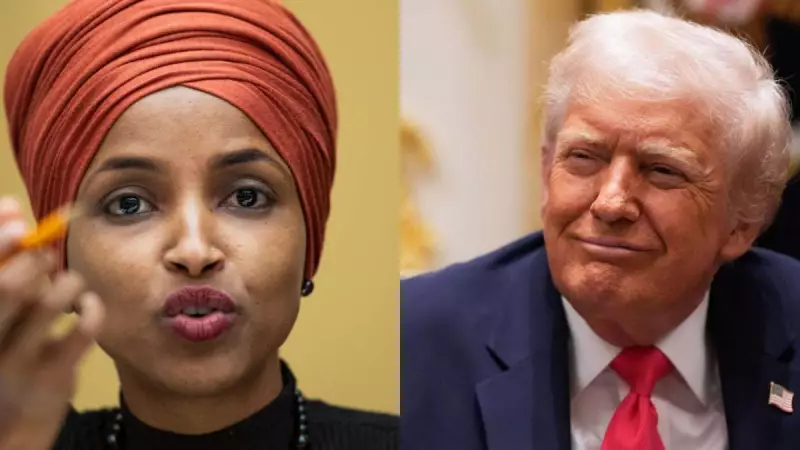
Former United States President Donald Trump has ignited a fresh political firestorm with a highly personal and derogatory attack on Democratic Congresswoman Ilhan Omar. During a campaign event, Trump labeled the Minnesota representative as "garbage" and questioned her loyalty, suggesting she does not want Somalis in the US. The incident, which occurred on December 3, 2025, has drawn sharp condemnation and reopened debates on immigration rhetoric in American politics.
The Controversial Remarks and Immediate Context
The verbal assault came during a rally where Trump was criticising his political opponents. Turning his focus to Ilhan Omar, one of the first Muslim women elected to Congress and a naturalised American citizen originally from Somalia, Trump made the inflammatory statement. He explicitly stated, "Ilhan Omar is garbage," linking his criticism to her stance on immigration policies. He further accused her by saying, "She doesn't want Somalians in the United States," a claim that stands in stark contrast to Omar's well-documented advocacy for immigrant communities and refugees.
This is not the first time Trump has targeted Omar. Throughout his political career, he has frequently singled out the progressive "Squad" member, often using rhetoric that critics argue fuels xenophobia and Islamophobia. The latest comments, however, mark a significant escalation in personal vitriol, moving beyond policy disagreements to a direct character assassination.

Political Repercussions and Widespread Condemnation
The reaction to Trump's comments was swift and severe from Democratic quarters and civil rights groups. Colleagues of Ilhan Omar rushed to her defence, condemning the language as dangerous and unbecoming of a former president. They argued that such rhetoric dehumanises not just a sitting member of Congress but also stigmatises an entire community of immigrants and refugees.
Analysts point out that the incident is likely to galvanise Trump's base, which resonates with his hardline immigration stance, while simultaneously mobilising Democratic and independent voters who see the remarks as evidence of his divisive politics. The controversy lands in the midst of a heated election cycle, ensuring it will dominate news cycles and become a focal point in the ongoing cultural wars over American identity and values.
The core of the dispute touches on several key issues in contemporary US politics: immigration, representation, and the tone of political discourse. Omar, as a high-profile figure who embodies the American immigrant story, often finds herself at the centre of these battles. Trump's attack reframes the debate not on policy details but on personal legitimacy and belonging.
Broader Implications for US Immigration Debate
Beyond the immediate personal insult, the episode has significant implications for the national conversation on immigration. By suggesting a Somali-American congresswoman is against Somali immigrants, Trump employs a familiar tactic of questioning the motives and authenticity of political opponents from minority backgrounds. This strategy often seeks to create confusion and undermine their credibility within their own communities and with the wider public.
Furthermore, the use of the term "Somalians"—which is grammatically incorrect; the correct demonym is "Somalis"—was noted by many observers as a subtle indicator of disregard or lack of familiarity. The incident underscores how immigration remains a potent and volatile issue, easily triggered by personalised attacks that can overshadow substantive policy discussions.
As the story develops, the focus will remain on the responses from both parties, the impact on voter sentiment, and the long-term effect on the political climate for immigrants and refugees in America. The event on December 3rd is a stark reminder of the deep divisions that continue to characterise the American political landscape.