US President Donald Trump has once again thrust Greenland into the geopolitical spotlight, issuing a stark warning that America must "do something" about the vast Arctic island. His comments, made on Friday, are driven by fears that strategic rivals Russia or China could move to seize control if Washington does not act first.
Denmark and Greenland Mount Diplomatic Defence
In immediate response to President Trump's renewed interest, diplomatic representatives from both Denmark and Greenland have initiated an urgent lobbying effort in the US capital. Their mission is to meet with American lawmakers and officials to firmly counter what they perceive as a call for a US "takeover" of Greenlandic territory.
The historical ties between Denmark and Greenland are deep and complex. Greenland has been under Danish control for roughly three centuries, despite the geographical separation of nearly 3,000 kilometres. This relationship originated in the colonial era. After the dissolution of the Denmark-Norway monarchy in 1814, Greenland continued under Danish administration.

US recognition of Danish sovereignty came in 1916, linked to a deal facilitating the American purchase of the Danish West Indies. A later Norwegian claim to parts of Greenland was definitively rejected by the Permanent Court of International Justice in 1933.
The post-World War II decolonisation movement led to significant changes. In 1953, Greenland's status shifted from colony to an integral part of Denmark, gaining representation in the Danish Parliament. A major step toward self-governance came with Home Rule in 1979 and the establishment of the Greenlandic Parliament. This was further advanced in 2009 with a self-rule law that provides a clear pathway to potential independence, a decision now resting solely with the Greenlandic people.
While polls suggest most Greenlanders favour independence eventually, and Denmark accepts this possibility, a major hurdle remains. Greenland's government relies heavily on an annual block grant from Denmark of about $600 million, plus Danish support for defence, coast guard, and policing. True independence is contingent on securing continued financial assistance post-separation, a commitment Greenland has yet to obtain from Copenhagen.
Why Greenland is a Global Strategic Prize
The world's largest island holds immense strategic value due to its location between North America and the Arctic. This positioning is ideal for early-warning missile defence systems and monitoring maritime activity in the region.
The United States has maintained a military presence there since World War II, operating the Pituffik Space Base (formerly Thule Air Base), which now plays a key role in missile surveillance. During the Cold War, the US even explored, then abandoned, plans to station nuclear missiles on the island.
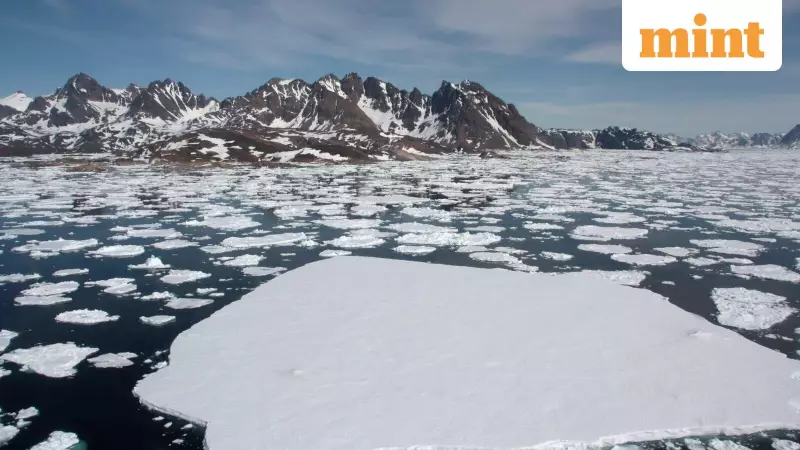
Beyond military significance, Greenland is believed to be rich in natural resources, including rare earth minerals, uranium, iron, and potentially vast oil and gas reserves. Global warming, which is melting the island's massive ice sheet, could make extracting these resources increasingly feasible.
President Trump, however, has publicly downplayed the mineral angle. He stated, "We need Greenland for national security, not minerals," and expressed concern about Russian and Chinese ship activity around the island—a view echoed by several Republican lawmakers.
A Renewed Push with a New Team
This is not President Trump's first attempt to acquire Greenland. In 2019, during his first term, he floated the idea of purchasing the island but was told it was not for sale. His interest was revived after returning to the White House in January 2025.
The campaign intensified in March 2025 when US Vice-President JD Vance visited Greenland and criticised Denmark for under-investing in the territory's security. By late 2025, Trump appointed Jeff Landry as a special envoy to Greenland, openly discussing the possibility of the island's incorporation into the United States, setting the stage for the current diplomatic standoff.
The situation presents a delicate challenge for all parties: the US seeking strategic advantage, Denmark protecting its realm, and Greenland navigating its path between dependence and a sovereign future.