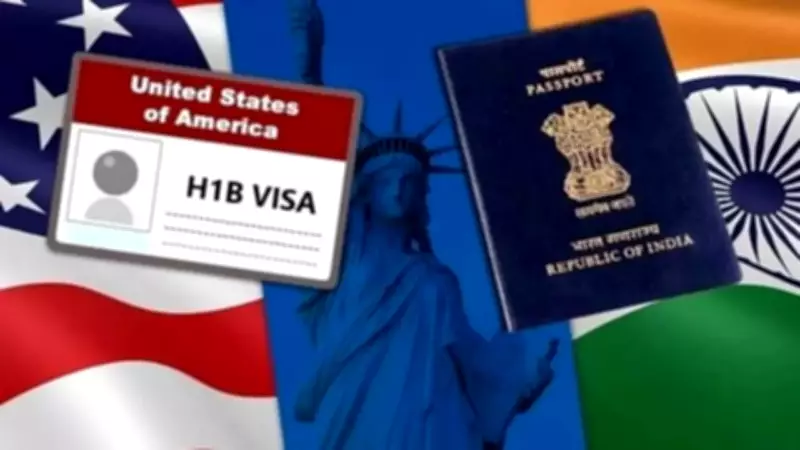
Trump's Immigration Policies Strain Historic US-India Partnership
The strategic partnership between the United States and India, historically built on mutual economic benefit, technological innovation, and robust people-to-people connections, is facing significant strain under sweeping immigration and trade policies implemented during former President Donald Trump's administration. Policies including drastic H-1B visa fee increases, broader immigration tightening, and protectionist economic measures are not only disrupting the careers of thousands of Indian professionals but are fundamentally reshaping decades-old norms that enabled global talent mobility.
H-1B Visa Overhaul: A $100,000 Turning Point
At the heart of this controversy lies Trump's executive proclamation imposing a staggering $100,000 annual fee on companies sponsoring H-1B visas—a quantum leap from previous costs ranging between $2,000 and $5,000. This visa category has historically served as the lifeblood of skilled immigration into the United States, particularly for Indian professionals excelling in technology, engineering, healthcare, and research sectors.
Indian nationals have long dominated this program, accounting for upwards of 70% of approved H-1B visas in recent years. This dominance enabled them to fill critical roles across Silicon Valley and numerous American industries. With the new fee structure in place, many Indian tech workers and their employers find the financial implications suddenly untenable, prompting urgent responses and travel advisories throughout autumn 2025.

Immediate Fallout and Sector-Wide Concerns
The repercussions were immediate and far-reaching:
- Major IT corporations including Infosys and Tata Consultancy Services experienced share price declines as markets digested implications of shrinking access to US labor opportunities
- US consulates across India pushed H-1B visa-stamping interview dates to 2027, with no new stamping available for Indian professionals throughout 2026
- Critics argue this punitive pricing policy threatens to dry up the global talent pipeline that has powered America's innovation economy for decades
Beyond Balance Sheets: Human Impact of Visa Changes
The effects of these visa policy shifts extend far beyond corporate financial statements, creating profound personal and professional disruptions:
- Travel chaos and family separation emerged as professionals scrambled to return to the US before new rules took effect, breaking from previous norms where H-1B holders traveled globally with minimal disruption
- Visa stamping delays and procedural bottlenecks have drawn criticism from Indian diaspora groups, with some alleging these measures specifically target Indian professionals already vetted and legally working in the US
- Family stability and social lives have been strained as migration routes once viewed as stable livelihood pathways become uncertain or prohibitively expensive
- Younger professionals on OPT and early-career pathways express profound uncertainty and disillusionment with what was once a clear trajectory to American employment
Strategic and Diplomatic Implications
Policy analysts argue that the visa overhaul reflects a broader shift in US strategy, prioritizing short-term political appeal over long-term international cooperation. Measures including visa fee hikes and tariffs are undermining what was once a mutually beneficial relationship built on openness and shared prosperity.
India's contributions to the US economy run deep—Indian tech professionals have helped build and scale innovations at major technology firms, contributing billions in tax revenue and trillions in economic value. Yet many perceive new policies as signaling these contributions are no longer valued as they once were.
This tension reaches into strategic and diplomatic cooperation, potentially weakening trust at a time when Washington has sought New Delhi's support on broader geopolitical challenges. By targeting Indian mobility and labor flows, critics suggest the US may be alienating a key strategic partner while undermining its own narrative as a global innovation hub.

Economic Protectionism and Innovation Concerns
The Trump administration has justified this policy shift as part of an "America First" agenda aimed at protecting domestic workers and wages by raising foreign labor costs. However, economists and business leaders warn such protectionism could yield adverse effects:
- Economists caution that making H-1B visas prohibitively expensive—essentially creating a "tariff on talent"—could harm both the US tech sector and broader innovation ecosystem
- Reduced mobility may push companies to hire more local talent or invest in international offices, though this may not fully offset the loss of cross-border expertise
- Some analysts suggest these changes could inadvertently strengthen India's domestic tech ecosystem as talent chooses to remain home or companies pivot regional operations back to India
Potential Long-Term Outcomes and Opportunities
While immediate effects present significant challenges, some experts identify potential long-term developments:
- India's domestic tech sector could benefit if returning talent and reduced H-1B reliance galvanize local innovation, higher education, and employment ecosystems
- Global firms may expand offshore hubs and remote work models, reducing fixation on US centers and redistributing opportunities worldwide
- Political recalibration may push India to diversify international partnerships and strengthen its negotiating posture on global labor mobility
Trump's H-1B visa reforms, particularly the unprecedented $100,000 fee and accompanying policy rhetoric, have transformed the visa from a coveted gateway into a complex and costly hurdle for Indian professionals. What was once a symbol of collaboration and shared success now feels like a targeted squeeze jeopardizing careers, dividing families, and shaking a fundamental pillar of bilateral cooperation.
Yet within this disruption lies a paradoxical opportunity: from constraint may emerge new possibilities back home, deeper regional investment, and renewed conversations about India's role in the global innovation ecosystem. If policymakers and industry leaders can channel this moment strategically, India may yet transform this pressure into a catalyst for domestic advancement while navigating the uncertain terrain of its relationship with the world's largest economy.