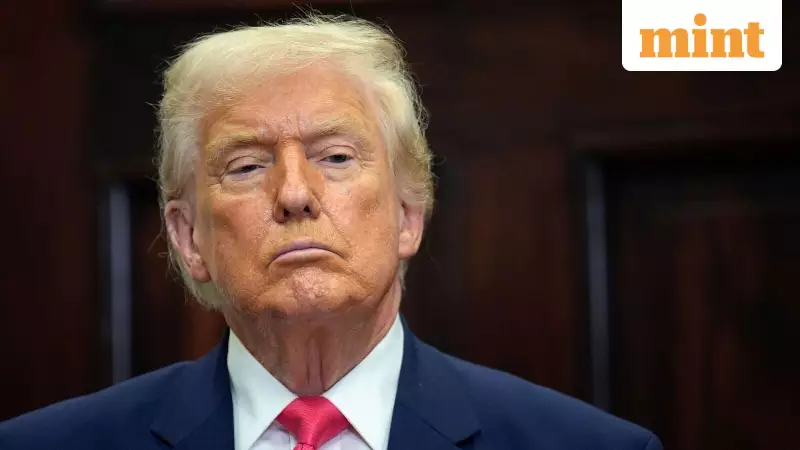
Recent video clips showing US President Donald Trump appearing to struggle with drowsiness during official meetings have ignited a fresh wave of online discussion and memes, while also raising questions about his sleep habits and overall health. The incidents come shortly after the President claimed to be "sharper" than he was decades ago.
Incidents of Drowsiness and Public Reaction
On December 2, during a Cabinet meeting, President Trump was seen with his eyes closed for an extended period, seemingly battling to stay awake. This was not an isolated event. A similar scene had unfolded earlier on November 6, when he spent close to 20 minutes fighting off sleep in the Oval Office. There have been other occasions this year where he was observed with his eyes shut.
The viral videos quickly spawned a series of internet memes, with users coining nicknames like 'Dozy Don' and 'Sleepy Don'. The public's curiosity was piqued, leading many to revisit a 2020 study that had specifically examined the effects of President Trump's sleep patterns on his behaviour and public communication.

What the Sleep Study Revealed
The analysis tracked President Trump's "late nights" by monitoring the timing of his social media posts. It found that his sleep duration seemed to have decreased compared to the early part of his first term. The President, who typically wakes around 6 AM, was posting more frequently between 11 PM and 2 AM in later years than he did in early 2017.
This increase in late-night activity was sharp and could not be explained by travel or seasonal changes. The study established a strong link between these late-night social media sessions and shorter sleep.
The consequences were measurable. Following such nights, his social media posts received fewer likes, retweets, and replies from followers. More critically, a text analysis of his speeches and interviews the next day showed clear shifts in tone. He sounded less happy and was almost three times more likely to sound angry. Interestingly, betting markets also showed a slight movement in favour of his political opponent after these late nights.
Health Claims and Expert Concerns
The debate over sleep comes amid a political context where President Trump has frequently criticised his rival, former US President Joe Biden, for allegedly "sleeping all the time." In November, the 79-year-old Trump stated, "I'm not a sleeper," contrasting himself with Biden.
President Trump maintains that he functions on only 4 to 5 hours of sleep each night, a claim his doctors have supported, saying it suits him and that his cardiovascular health is comparable to that of a 65-year-old.
However, most health experts express concern. While some individuals can manage on minimal sleep, the routine falls far short of official recommendations. The US Centers for Disease Control and Prevention (CDC) advises that adults over 65 should aim for 7 to 8 hours of sleep nightly. Trump's documented late-night habits lead to questions about sleep adequacy and its potential impact on his judgment and public communication.
The Trump campaign has firmly dismissed any speculation about the President's health. White House press secretary Karoline Leavitt told The New York Times that, unlike the Biden administration, Team Trump has been "open and transparent" about the President's "exceptional" health, rejecting any parallels with concerns about cognitive decline.