The United Kingdom government finds itself at the centre of a heated controversy, facing mounting criticism for its perceived missteps in addressing the long-standing issue of child sexual exploitation by grooming gangs. This public anger has surged even as the administration moves forward with a significant new policy focused on animal welfare, specifically banning the practice of boiling live lobsters.
Animal Welfare Advances Amid Human Tragedy
After years of discussion, the UK has officially declared that boiling lobsters alive violates modern animal welfare standards. The new government strategy requires that lobsters must be stunned using an electric device or rendered insensible by chilling in cold air or ice before any cooking process begins. This decision is an extension of a landmark 2022 law which formally recognised that invertebrates like lobsters, crabs, and octopuses are sentient beings capable of experiencing pain.
The broader animal welfare plan, championed by the Labour government, includes several other key measures:

- Outlawing the use of hen cages and pig farrowing crates.
- Ending cruel puppy farming practices.
- Launching a consultation on banning electric shock collars for dogs.
- Introducing more humane slaughter standards for farmed fish.
Hunting regulations will also be tightened, featuring a ban on shooting hares during their breeding season and putting an end to so-called trail hunting.
Public Outcry Over Grooming Gang Failures
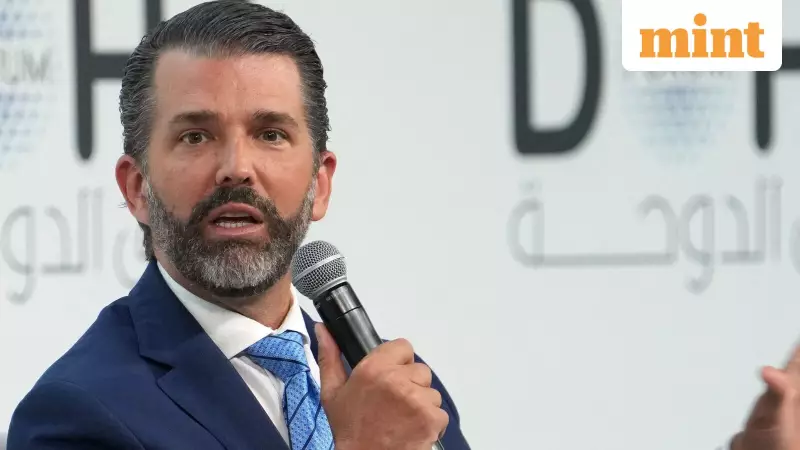
The government's focus on crustacean welfare, however, has drawn sharp rebuke from critics who point to what they see as a failure to adequately address human suffering. Donald Trump Jr. encapsulated this sentiment in a pointed tweet: “I really wish they’d ban the roving gangs of migrant rapists and groomers. Apparently their priorities are elsewhere.”
This comment taps into deep-seated public frustration over systemic failures spanning decades in tackling grooming gangs. These criminal networks, predominantly involving men of British-Pakistani heritage who sexually exploited vulnerable white girls, first came to light in the early 2000s. Major prosecutions began around 2010.
Hundreds of perpetrators have been convicted in towns including Rotherham, Rochdale, Telford, and Oldham, with trials still ongoing. Multiple inquiries, most notably the extensive Independent Inquiry into Child Sexual Abuse led by Professor Alexis Jay from 2015 to 2022, laid bare institutional neglect. Reports documented how police and social services ignored victims, engaged in victim-blaming, and failed to act due to misplaced fears of being labelled racist.
The scale was horrific. In Rotherham alone, at least 1,400 girls were abused between 1997 and 2013.
Stalled Inquiry and Political Reckoning
Mounting political pressure forced the government to commission a review by Louise Casey in 2025. Her report confirmed that authorities had deliberately avoided confronting the role of race and ethnicity in these crimes. Casey recommended a full national statutory inquiry, a proposal the government accepted.
However, this crucial inquiry has now stalled. Four survivors recently resigned from the victim liaison panel, citing serious disagreements over the appointment of leadership and concerns about the inquiry's intended scope and effectiveness.
Further political heat has been directed at Prime Minister Keir Starmer. Critics like Elon Musk have accused Starmer of complicity in past failures during his tenure as Director of Public Prosecutions. Legal experts clarify that while Starmer was not personally involved in decisions to drop early cases, he later supported efforts to reopen and investigate these scandals.
The juxtaposition of a progressive animal welfare agenda against a painfully slow and troubled response to one of the UK's most devastating child protection failures continues to fuel a fierce national debate about government priorities and justice.