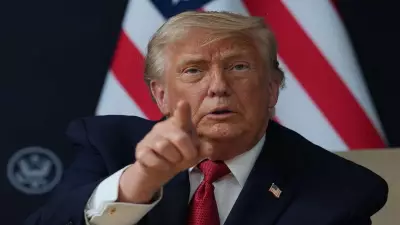
A White House official has stated that the United States Commerce Department's recent imposition of a 25% national security tariff on certain high-end semiconductors represents only the initial "phase one" action. The official, who spoke anonymously, indicated this move could be followed by further announcements after discussions with other nations and companies.
Tariff Policy May Expand Based on Negotiations
The comments suggest the tariff policy might grow depending on how negotiations progress. The official noted that President Donald Trump has previously threatened much higher duties, potentially up to 100%, on chips not manufactured within the United States.
This tariff forms part of broader efforts by the Trump administration to strengthen domestic chip production. The administration consistently emphasizes that semiconductors constitute a national security concern due to their critical roles in defense systems, artificial intelligence, consumer electronics, and industrial equipment.

Details on Affected Products Remain Unclear
The new tariff applies specifically to selected high-end chips, though precise details regarding affected products and companies have not been immediately disclosed. According to reports, the White House views the current tariff as an opening measure rather than a final decision, with any additional steps contingent on talks with trade partners and industry players.
Trump Administration's Approach to Nvidia AI Chips
In related developments, the Trump administration recently announced it will permit the sale of Nvidia's H200 AI chips to China, but under strict conditions. These conditions include a 25% government cut on sales and export caps designed to protect US supply.
The H200 chip belongs to Nvidia's Hopper generation, a high-performance chip sold in the US and other global markets. Unlike the earlier H20 chip, which was deliberately slowed down for export, the H200 is not a China-only design.
President Trump acknowledged that the H200 has already been surpassed by Nvidia's newer Blackwell and Rubin chips. However, he argued the US would still benefit financially, stating, "It's not the highest level, but it's a pretty good level, and China wants them and other people want them — and we're going to be making 25% on the sale of those chips, basically."
The administration's actions reflect a dual strategy: imposing tariffs to bolster domestic manufacturing while allowing certain exports under controlled conditions to generate revenue and maintain influence in the global semiconductor market.