In a significant move to reinforce longstanding strategic partnerships, the United States has greenlit military sales totalling $1.4 billion to its key Gulf allies, Saudi Arabia and Bahrain. The proposed deals, now forwarded to the US Congress for a mandatory 30-day review, focus on sustaining and modernising critical defence assets, ensuring these nations remain operationally ready in a volatile region.
Breaking Down the $1.4 Billion Defence Packages
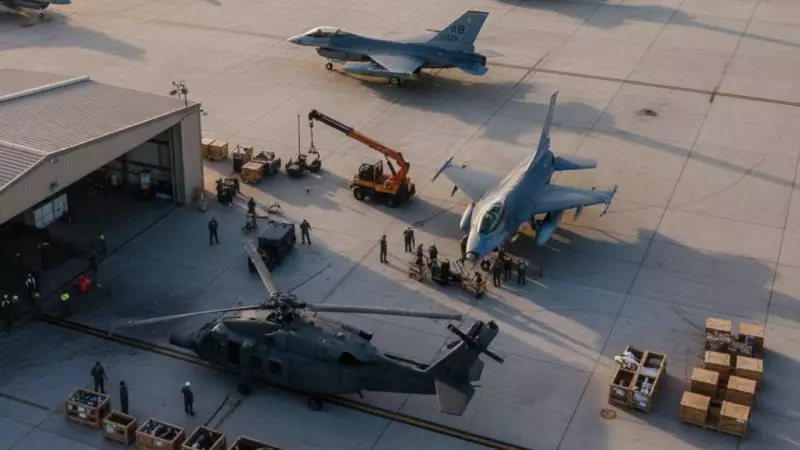
The approvals, handled by the US Defence Security Cooperation Agency (DSCA), consist of three separate packages. For Bahrain, a $445 million Foreign Military Sales case is dedicated to the sustainment of its F-16 fighter jet fleet. This package includes essential aircraft parts, missile containers, radar components, guidance system spares, and ground support equipment. The principal contractors for this deal are expected to be General Electric Aerospace and Lockheed Martin Aeronautics.
Bahrain, recognised as a major non-NATO ally, first inducted F-16s in 1990, marking it as the first Gulf nation to operate these advanced jets. The latest support aims to maintain this capability and ensure seamless interoperability with US forces.

For Saudi Arabia, the US has cleared two packages, each valued at $500 million. The first is a comprehensive logistics and maintenance support deal for the Royal Saudi Land Forces Aviation Corps' helicopter fleet. It covers heavy-lift aircraft like Black Hawks, Apaches, and Chinooks, as well as lighter models such as Schweizer 333s and Aerial Scouts. The deal provides the Saudi military with direct access to a US system for ordering replacement parts on demand.
The second Saudi package is a blanket order for aviation training services, to be provided by the US Army. This dual-pronged approach ensures Saudi helicopter units remain fully mission-capable without necessitating the permanent stationing of additional US personnel or contractors in the kingdom.
Strategic Context and Congressional Hurdles
These sales underscore the enduring and central role of the United States in Gulf security architecture. The DSCA has stated that the sales will not alter the fundamental military balance in the region. The approvals follow closely on the heels of a visit by Saudi Crown Prince Mohammed bin Salman to Washington for high-level talks with then-President Donald Trump, where defence cooperation was a key agenda item.
Notably, ahead of that visit, President Trump had announced intentions to sell Saudi Arabia dozens of F-35 stealth fighter jets, which would make Riyadh the first Arab country to operate the fifth-generation aircraft. However, all such sales remain subject to Congressional oversight.
The US Congress retains the power to block these deals within the review period. Lawmakers may act due to concerns over protecting advanced military technology or in response to human rights issues, most notably the 2018 killing of journalist Jamal Khashoggi, which US intelligence agencies linked to Saudi leadership.
Implications for Regional Security and US Policy
This $1.4 billion commitment is more than a simple commercial transaction; it is a strategic investment in regional stability and interoperability. By ensuring Bahrain's F-16 fleet is upgraded and Saudi Arabia's rotary-wing assets are fully maintained and their crews well-trained, the US is directly bolstering the operational readiness of two pivotal partners.
The move signals Washington's continued commitment to Gulf security amidst a complex geopolitical landscape, while also navigating domestic political pressures in Congress. It reinforces the notion that these defence partnerships serve as a vital strategic lifeline, promoting a balance of power and enabling coordinated responses to regional contingencies, much like during the 1991 Gulf War.
As the deals undergo Congressional scrutiny, they highlight the delicate balance the US administration must strike between advancing its strategic interests in the Gulf and addressing legitimate concerns over human rights and technology security.