

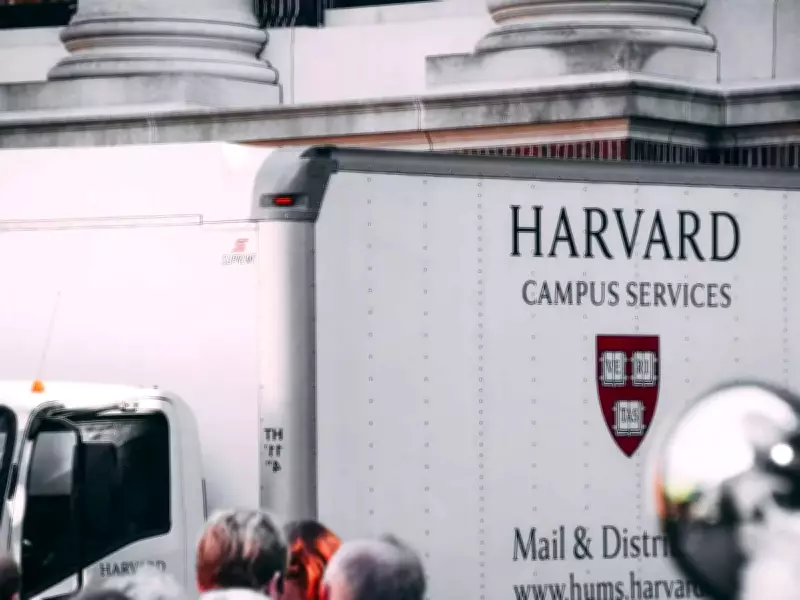
US Defense Department Severs Ties with Harvard Over Ideological Concerns
When the United States Secretary of Defense declares that a prestigious university no longer meets the requirements of the military establishment, the implications extend far beyond academic circles. This development strikes at the very core of how authority, intellectual pursuit, and compliance are intended to converge in contemporary American society.
Pentagon Terminates Harvard Military Programs
The Department of Defense has made the significant decision to discontinue all military training, fellowship, and certificate programs with Harvard University starting from the 2026–27 academic year. This action represents one of the most direct efforts by the Trump administration to redefine the relationship between higher education institutions and governmental authority. While the official reasoning is presented as ideological, the underlying dispute appears to concern a more essential question: which entities possess the authority to determine permissible thought within institutions that mold future national leaders.
The Allegation: Radical Ideology Infiltration
In announcing this policy shift, Defense Secretary Pete Hegseth articulated the decision using distinctly moral terminology. He asserted that Harvard University had failed to adequately "understand and appreciate our warrior class." According to his statement, military officers who attended the university returned with "heads full of globalist and radical ideologies that do not improve our fighting ranks."

The specific language employed is particularly revealing. There is no mention of academic achievement, professional capability, or operational shortcomings. The criticism is fundamentally cultural and intellectual. In this narrative, Harvard does not simply employ different teaching methodologies; it actively corrupts military personnel.
However, the administration has not publicly identified particular courses, syllabi, or faculty members responsible for this alleged ideological shift. Furthermore, no evidence has been released demonstrating that officers educated at Harvard performed less effectively than their counterparts trained through military war colleges or other civilian educational institutions.
Broader Narrative Against Elite Institutions
Instead, the accusation is founded upon a more extensive narrative persistently promoted by the Trump administration: that elite universities operate as ideological manufacturing centers, antagonistic toward nationalism, traditional power structures, and the implementation of state authority.
Nature of the Terminated Programs
The programs now being eliminated were not undergraduate humanities seminars or activist training platforms. They comprised graduate-level professional military education initiatives—including short-term fellowships, certificate programs, and executive-style courses designed to expose senior officers to strategic thinking, civil-military relations, global governance frameworks, and public policy analysis.
Historically, such programs have been regarded as complementary additions rather than replacements for military war college education. Civilian academic training has never guaranteed advancement within the armed forces hierarchy. Its value resided in other areas: preparing officers for complex post-service careers in government, diplomatic services, and industry sectors, while broadening their comprehension of the civilian institutions they ultimately serve.
Critics contend that this educational breadth may be precisely what triggers administrative concern.






