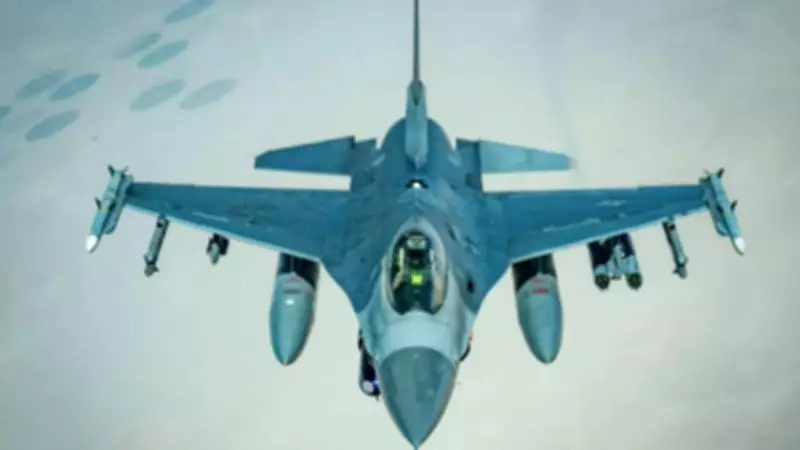
US Deploys Advanced F-22 Raptor Stealth Fighters to Israel Amid Escalating Iran Tensions
In a rare operational deployment that signals a major expansion of American military positioning in the Middle East, the United States has sent its most advanced stealth fighter, the F-22 Raptor, to Israel. This visible show of airpower comes amid rising tensions between Washington and Tehran, with negotiations over Iran's nuclear program continuing and threats of military action looming.
Deployment Details and Operational Significance
According to open-source flight tracking data and aircraft spotters, twelve F-22 Raptors were observed departing from Royal Air Force Lakenheath in England earlier in the day. One aircraft reportedly returned to base due to a technical issue, but the remaining eleven continued their journey to an Israeli Air Force base. The aircraft had been stationed in the United Kingdom for several days, with delays attributed to problems affecting accompanying refueling planes.
This deployment is particularly significant because it represents an operational move rather than a joint training exercise. The F-22, flown exclusively by the US Air Force, is widely regarded as one of the world's most advanced air-superiority fighters, designed specifically for high-end air-to-air combat with exceptional stealth capabilities, speed, and maneuverability.

Geopolitical Context and Regional Implications
The arrival of these advanced stealth fighters in Israel occurs against a backdrop of heightened tensions between Washington and Tehran. Negotiations over Iran's nuclear program are ongoing, with both sides scheduled to meet in Geneva on Thursday. Iranian Foreign Minister Abbas Araghchi has reportedly been authorized to present a counterproposal to the American delegation during these talks.
At the same time, US President Donald Trump has repeatedly warned that he will attack Iran if talks collapse. Tehran has threatened to retaliate against Israel and US assets in the region in the event of any American strike. Israeli officials reportedly believe that American military action is likely, with senior defense officials from both countries maintaining close contact.
One Israeli official told Channel 12 that a diplomatic breakthrough would be considered "the surprise of the year," highlighting the prevailing expectation of continued tensions.
Broader Military Buildup in the Region
In recent days, additional US aircraft have been tracked heading toward the Middle East, including:
- F-35 Lightning II stealth fighters
- F-15 Eagle fighters
- F-16 Fighting Falcon fighters
- Refueling tankers
- Cargo planes
Analysts describe this as the largest American military buildup in the region since 2003, suggesting a comprehensive reinforcement of US airpower capabilities in response to the escalating situation with Iran.
Understanding the F-22 Raptor's Capabilities
The Lockheed Martin–Boeing F-22 Raptor represents the pinnacle of American air dominance technology. Developed under the US Air Force's Advanced Tactical Fighter program, this twin-engine, jet-powered, all-weather, supersonic stealth fighter first flew in 1997 and entered operational service in December 2005.
Key features of the F-22 include:
- Advanced stealth capabilities that make it difficult to detect on radar
- Supercruise ability to sustain supersonic flight without afterburners
- Superior maneuverability with thrust-vectoring engines
- Integrated avionics and sensor fusion
- Air-to-air and air-to-ground combat capabilities
Originally intended as a 750-aircraft fleet, production was reduced to 195 jets due to high costs and shifting defense priorities. It remains the USAF's premier air-dominance fighter, having replaced the F-15 Eagle in many active-duty squadrons.
Global Context: Fifth-Generation Fighter Comparisons
The deployment of F-22s to Israel puts a spotlight on America's fifth-generation air dominance capabilities and how they compare with competing stealth jets from other nations.

China's Chengdu J-20: Also known as "Weilong" or "Mighty Dragon," this twin-engine, all-weather stealth fighter was developed by China's Chengdu Aircraft Corporation. Designed primarily for air superiority with precision-strike capability, the J-20 made its maiden flight in January 2011 and entered service in March 2017. With its induction, China became the second country after the United States to field an operational fifth-generation stealth fighter.
Russia's Sukhoi Su-57: Developed under the PAK FA program to replace aging MiG-29 and Su-27 variants, Russia's first operational fifth-generation fighter entered limited service in 2020. Unlike Western stealth fighters that prioritize minimal radar cross-section, the Su-57 emphasizes super-maneuverability alongside reduced radar signature. The aircraft incorporates internal weapons bays, composite materials, and 3D thrust-vectoring engines to balance agility with stealth.
US F-35 Lightning II: This fifth-generation multirole fighter comes in three variants and is designed for air superiority, strike missions, electronic warfare, and intelligence operations. While technologically advanced, the F-35 has certain restrictions on the use of non-US weapons systems that may limit operational flexibility for some international partners.
The deployment of F-22 Raptors to Israel represents a clear demonstration of American military commitment in the region at a time of significant geopolitical uncertainty. As tensions with Iran continue to escalate, this visible show of advanced airpower serves both as a deterrent and as preparation for potential conflict scenarios in the Middle East.