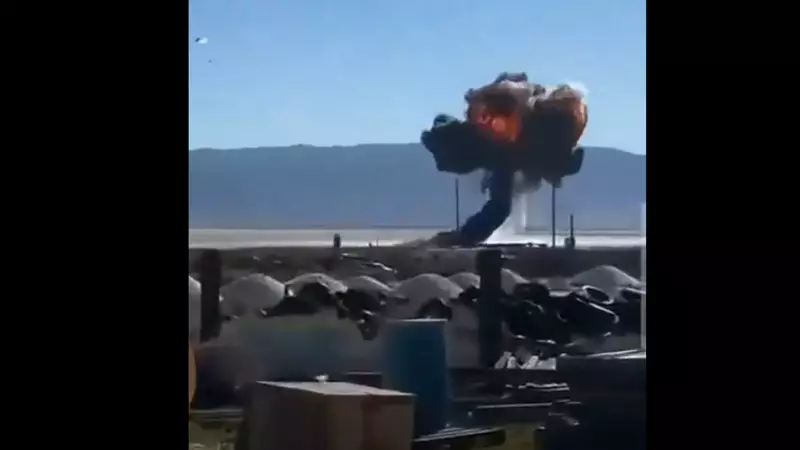
In a dramatic incident over the weekend, a high-performance United States Air Force F-16 Fighting Falcon fighter jet crashed in a remote desert area of Southern California. The pilot of the advanced aircraft managed to eject safely from the cockpit before impact, escaping serious injury.
Details of the F-16 Fighter Jet Crash
The crash occurred on a Saturday afternoon, March 9, 2024. The aircraft went down in the Inyokern area, near the Naval Air Weapons Station China Lake in Kern County, California. This region is known for its vast, sparsely populated desert terrain, often used for military testing and training exercises.
According to official statements from the US Air Force, the pilot was the sole occupant of the single-engine jet. Demonstrating the effectiveness of the ejection system, the aviator successfully activated the seat and parachuted to the ground. The pilot was subsequently located by emergency responders and was reported to be in stable condition, a testament to the safety protocols and equipment.

The F-16 involved in the crash was assigned to the 144th Fighter Wing of the California Air National Guard. The unit is based at Fresno Air National Guard Base. At the time of the accident, the jet was participating in a routine training mission, a standard part of maintaining pilot proficiency and combat readiness.
Immediate Response and Investigation
Following the crash, a multi-agency response was swiftly initiated. Emergency crews from both military and local civilian agencies rushed to the remote crash site. Their primary objectives were to secure the area, ensure the pilot's well-being, and begin the process of assessing the scene.
The US Air Force has officially announced that a thorough investigation into the cause of the crash is now underway. A standard board of officials will examine all potential factors, which typically include:
- Mechanical or technical failure of the aircraft.
- Environmental conditions at the time of the flight.
- Pilot actions and procedures followed during the mission.
Authorities have cordoned off the wreckage site to preserve evidence for investigators. There have been no initial reports of damage to civilian property or injuries to people on the ground, which is likely due to the crash occurring in an isolated desert location.
Context and Significance of the Incident
The F-16 Fighting Falcon is a cornerstone of the US and allied air forces, renowned for its agility and multi-role capabilities. While such aircraft are engineered to the highest safety standards, incidents during demanding training operations are an inherent risk of military aviation. The successful ejection and survival of the pilot highlight the critical importance of rigorous training and reliable safety systems.
For the California Air National Guard and the US Air Force, this event will trigger a meticulous review of procedures and aircraft maintenance records. The findings of the investigation will be crucial for preventing similar occurrences in the future and ensuring the continued safety of aircrew.
This crash near Inyokern adds to a list of military aviation incidents in recent years, underscoring the dangers faced by pilots even during non-combat flights. The community and the nation will be awaiting the investigation's conclusions to understand the precise chain of events that led to the loss of a valuable fighter jet.