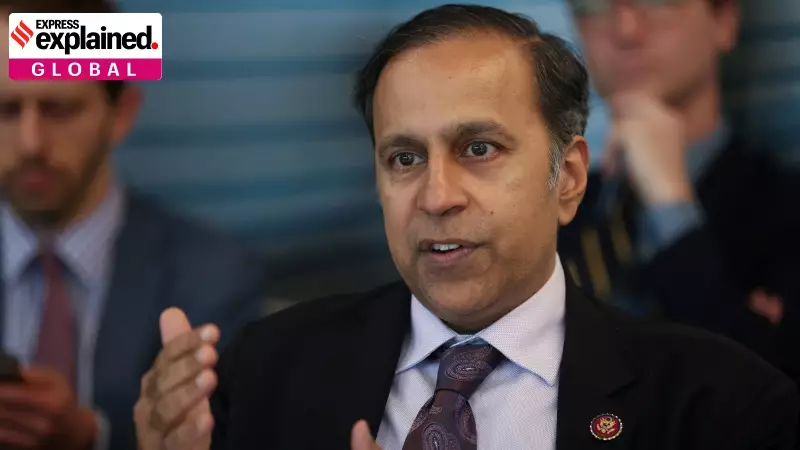
In a significant development for skilled professionals worldwide, US Congressman Raja Krishnamoorthi has reintroduced legislation that could dramatically reshape the high-skilled immigration landscape for Indian workers. The High-Skilled Immigration Reform for Employment (HIRE) Act, announced on November 26, 2025, proposes to double the annual cap on H-1B visas, a move with profound implications for India's vast tech talent pool.
What is the HIRE Act and What Does It Propose?
The central objective of the HIRE Act, as outlined by Democratic Representative Raja Krishnamoorthi from Illinois, is to bolster America's long-term economic and technological edge on the global stage. The congressman argues that to "build the jobs and industries of tomorrow," the United States must lead in innovation by nurturing domestic talent while also attracting global expertise.
The bill seeks to achieve this through two primary mechanisms. Firstly, it aims to increase the regular annual quota of H-1B visas from the current 65,000 to 130,000. Additionally, it proposes to eliminate the existing limit of 20,000 additional visas reserved for foreign graduates with advanced degrees from US institutions.

Secondly, the legislation would channel new funding towards enhancing Science, Technology, Engineering, and Mathematics (STEM) education programs in American elementary and secondary schools. This dual approach is designed to strengthen the domestic workforce pipeline while simultaneously addressing immediate talent shortages through skilled immigration.
Why This Matters Immensely for Indian Professionals
The potential impact of the HIRE Act on Indian nationals cannot be overstated. The H-1B visa program has long been a critical gateway for Indian talent to work in specialized fields within the United States. Data from the US government confirms that individuals born in India are the largest beneficiaries of this program, consistently accounting for more than 70% of all approved H-1B petitions each year since 2015.
To put this in perspective, between October 2022 and September 2023, a staggering 72 percent of the nearly 400,000 visas issued under the H-1B program were granted to Indian nationals. People born in China are a distant second, with their share hovering around 12-13% since 2018.
The reintroduction of this bill comes against a backdrop of increasing costs and protectionist measures for H-1B visas. In September 2025, former President Donald Trump imposed a substantial $100,000 annual fee on these visas, signaling a shift in policy aimed at encouraging companies to hire American workers. If passed, the HIRE Act could counter this trend and open a significant number of new opportunities for Indian tech, engineering, and healthcare professionals at a crucial time.
Broad Support and the Road Ahead
The proposed legislation has garnered support from key industry bodies. The ITServe Alliance, the largest association of IT services organizations in America, has endorsed the HIRE Act. Raghu Chittimalla, the governing board chair of the Alliance, stated that the act is a vital step toward modernizing the high-skilled immigration system and ensuring that talented professionals can continue to fuel America's innovation economy.
For Indian workers and the companies that rely on their skills, the passage of the HIRE Act would represent a major policy shift. It would not only increase the sheer number of available visas but also potentially ease the intense competition in the existing lottery system. However, the bill must still navigate the complex legislative process in the US Congress, where its fate remains uncertain.
The outcome will be closely watched by thousands of Indian students and professionals for whom the United States represents a premier destination for career growth and innovation.