

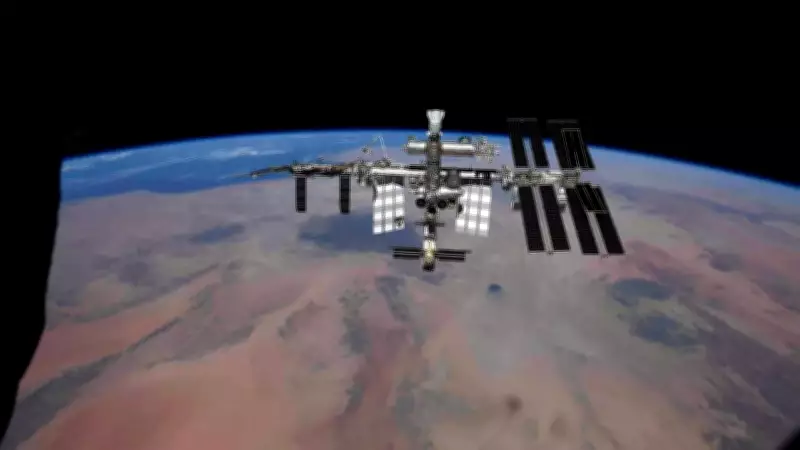
US Space Policy at a Crossroads: LEO Continuity Under Threat
The United States is approaching a pivotal moment in its space strategy, balancing ambitious long-term goals for lunar colonization against immediate challenges in low Earth orbit (LEO). This region, extending up to 2,000 kilometers from Earth, has hosted continuous human presence for over two decades, primarily through the International Space Station (ISS). However, with the ISS slated for retirement in 2030, concerns are mounting about a potential gap in orbital operations that could undermine scientific progress and international influence.
ISS Legacy and Impending Retirement
Since its inception in 1998, the International Space Station has been a cornerstone of global space collaboration, hosting more than 280 astronauts and facilitating thousands of microgravity experiments. It has played a crucial role in advancing human spaceflight capabilities and fostering technological innovation. However, structural degradation due to aging has escalated maintenance costs, prompting NASA to plan for its decommissioning by 2030. This move raises urgent questions about the readiness of a successor station to ensure uninterrupted access to LEO.
China's Strategic Advance with Tiangong
Amid this transition, China has solidified its position in low Earth orbit with the Tiangong space station, completed in 2022. Tiangong supports ongoing crewed missions and scientific research, positioning China as a key player in orbital operations. If the ISS retires without a functional replacement, Tiangong could become the sole operational space station in LEO, influencing international partnerships, technology standards, and access to critical research platforms. This scenario underscores the strategic implications of space infrastructure dominance.

NASA's Commercial Transition Faces Delays
NASA's strategy to shift from government-run to commercial space stations aims to reduce costs and enhance commercialization. However, the rollout has been slower than expected, with repeated delays in proposal requests and administrative hurdles, including political changes and potential government shutdowns. These setbacks affect private companies like Axiom Space and Vast, which rely on NASA funding and guidance to develop next-generation stations. Projects involving Blue Origin and Boeing are also in progress, but the commercial market remains nascent, with national space agencies as primary consumers.
Risks of a LEO Gap for US Space Research
If the ISS retires before a commercial successor is operational, the United States risks losing its ability to maintain continuous human activity in low Earth orbit. This gap would disrupt scientific research, astronaut training, and mission preparation, particularly for programs like Artemis, which depend on microgravity studies for deep-space exploration. Analyses from organizations such as the Center for Strategic and International Studies highlight the potential consequences for US leadership in space.
The evolving landscape underscores the need for accelerated efforts to bridge the LEO transition, ensuring that the US remains competitive in the global space arena while safeguarding vital research and collaborative opportunities.






