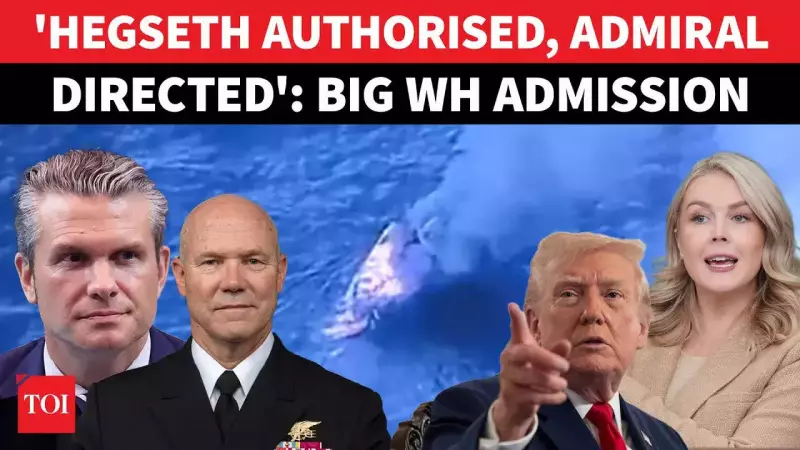
The White House has stepped forward to defend one of the most contentious American military actions this year: a September strike in the Caribbean targeting a vessel suspected of drug trafficking. The operation, which involved a second strike after initial survivors were left alive, has ignited a political firestorm in Washington.
White House Confirms Chain of Command, Defends Legality
On Monday, White House Press Secretary Karoline Leavitt addressed the growing controversy head-on. She confirmed a critical detail that shifts the narrative: the decision for the follow-up strike was ordered by a U.S. Navy admiral, not by Defence Secretary Pete Hegseth. This clarification comes as lawmakers from both the Democratic and Republican parties intensify their demands for a thorough investigation and clear answers regarding the operation's conduct.
Leavitt staunchly defended the mission's legitimacy, insisting it was fully legal under both U.S. and international law. However, in a significant admission, she did not deny the presence of survivors on the suspected drug-running boat before the second attack was carried out. This specific point has become the central focus of alarm and scrutiny within Congress, raising profound ethical and legal questions.

Congressional Alarm and Demands for Investigation
The revelation that survivors were present before the second strike has triggered bipartisan concern on Capitol Hill. The incident, occurring in the strategic waters of the Caribbean near Venezuela, has amplified debates over military rules of engagement and accountability. Critics are labelling the action as a potential war crime, while supporters argue it was a necessary intervention in the fight against narcotics trafficking.
The political fallout is immediate and severe. Lawmakers are now formally pushing for comprehensive investigations into the decision-making process that led to the deadly second strike. The core question being asked is whether the use of force was proportionate and justified given the circumstances reported.
Broader Implications for US Policy and Global Tensions
This incident does not exist in a vacuum. It occurs against a backdrop of heightened global tension and complex diplomatic relations, particularly with nations like Venezuela. The strike and its aftermath risk becoming a flashpoint, influencing regional dynamics and America's counter-narcotics strategy in the Western Hemisphere.
Furthermore, the White House's vigorous defence of Secretary Hegseth, while attributing the critical decision to a Navy admiral, highlights the administration's attempt to manage a public relations and political crisis. The outcome of the promised congressional probes will likely have lasting implications for military oversight and the legal frameworks governing such covert or direct actions in the future.
As the story develops, all eyes remain on Washington. The demands for transparency and accountability from Congress suggest this controversy is far from over, promising more hearings, testimony, and potentially, significant policy repercussions.