

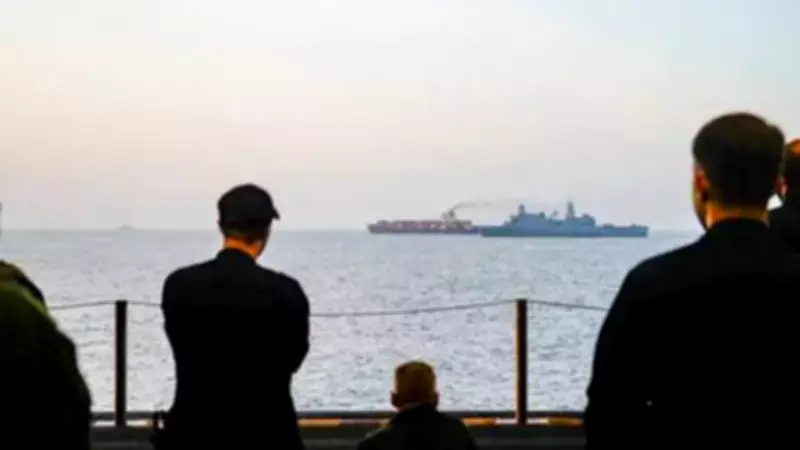
US Naval Forces Seize Iranian Cargo Vessel in Gulf of Oman Amid Suspicions of Military Cargo
In a significant maritime security operation, United States naval forces have intercepted and boarded an Iranian-flagged cargo vessel in the strategic waters of the Gulf of Oman. The incident has escalated tensions in the region, with officials expressing deep concern over what may be sensitive cargo onboard the ship.
Details of the Interception and Suspected Cargo
The container ship Touska, which is linked to the sanctioned Islamic Republic of Iran Shipping Lines (IRISL), was boarded by US forces on Sunday near Iran's Chabahar port. According to maritime security sources cited by Reuters, initial assessments indicate the vessel is likely carrying "dual-use" items. These are materials that can have both civilian and military applications, potentially including metals, pipes, and electronic components that US authorities flag as supporting military use.
The US military, through United States Central Command, stated that the ship was stopped after its crew failed to respond to repeated warnings over a six-hour period. The Touska was operating in violation of a US-enforced blockade, which has been expanded recently to intercept vessels suspected of carrying contraband, including weapons or related materials.

International Reactions and Historical Context
Iran has strongly condemned the operation, labeling it "armed piracy." The Iranian military reported that the vessel had been sailing from China and warned of a possible response, though they noted constraints due to civilians onboard, including crew members' families. China also expressed concern over the interception, urging all sides to avoid escalation and adhere to ceasefire agreements.
Voyage data adds further scrutiny to the situation. Analysis by SynMax shows the ship departed Taicang port in late March, loaded additional containers at Gaolan port, and later stopped near Port Klang in Malaysia before heading toward the Gulf of Oman. According to ship-tracking data from MarineTraffic, the vessel last transmitted its position at 1308 GMT.
This development follows Washington's sanctioning of IRISL in 2019, alleging it was used to transport materials linked to Iran's weapons programmes. US President Donald Trump commented on the incident, stating the vessel had a "prior history of illegal activity" and confirming that US forces were inspecting the cargo onboard.
Broader Implications and Regional Tensions
The interception highlights ongoing geopolitical tensions in the Middle East, particularly between the US and Iran. The Gulf of Oman is a critical maritime chokepoint for global oil shipments, making such incidents highly sensitive. The US Navy's expanded blockade aims to prevent the flow of contraband, but it risks further straining diplomatic relations.
As investigations continue, the exact contents of the Touska's current shipment remain unconfirmed, though sources indicate it has previously transported similar cargo. The situation underscores the complex interplay of international law, security concerns, and regional politics in one of the world's most volatile waterways.

