

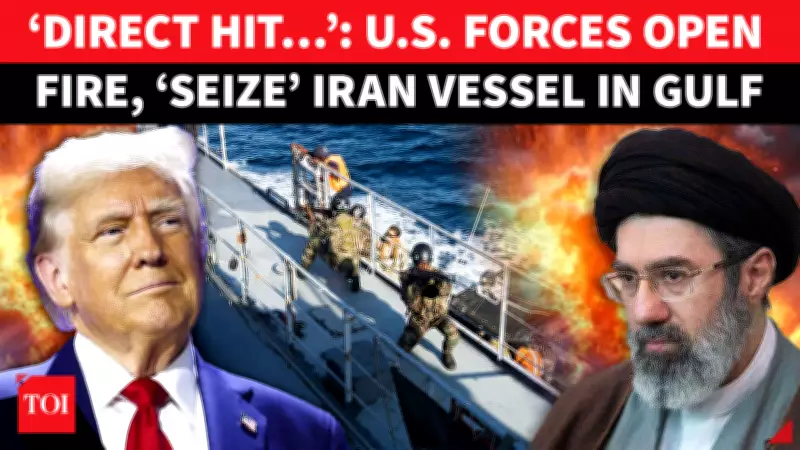
US Navy Seizes Iranian Vessel in Gulf of Oman After Warning Shots
In a significant escalation of maritime tensions, United States military forces have opened fire on and captured an Iranian-flagged ship in the Gulf of Oman. The incident occurred after the vessel reportedly ignored multiple warnings from US Navy personnel, leading to its seizure as part of ongoing blockade enforcement operations in the region.
Trump Confirms Details of Naval Operation
President Donald Trump has publicly shared details of the operation, stating that the US Navy disabled the Iranian ship during an interception. According to his account, the vessel was boarded and captured following its failure to comply with directives, marking a bold move in the strategic waterways.
This action underscores the heightened military posture of the US in the area, aimed at controlling key shipping routes amid persistent regional disputes.

Iranian Response and Counter-Claims
In response to the seizure, Iranian media has reported that the Islamic Revolutionary Guard Corps (IRGC) forced US troops to withdraw from the Strait of Hormuz after the attack. This claim adds a layer of complexity to the incident, suggesting a rapid counter-response from Iranian forces.
The conflicting narratives from both sides highlight the volatile nature of the situation, with each nation asserting its dominance over critical maritime corridors.
Escalating Tensions and Global Concerns
The seizure of the Iranian vessel represents a major escalation at sea, raising fears of a broader confrontation between the US and Iran. With the Strait of Hormuz already under significant pressure due to previous incidents, this event intensifies global anxieties over:
- Maritime security in one of the world's busiest shipping lanes
- Energy supply stability, given the region's crucial role in oil transportation
- Potential military clashes that could disrupt international trade
Analysts warn that such incidents could spiral into larger conflicts, as both nations continue to flex their naval muscles in a bid for control over strategic waterways.
Context of Ongoing Regional Standoffs
This latest confrontation occurs against a backdrop of persistent tensions in the Gulf region, where the US has maintained a naval presence to enforce sanctions and ensure freedom of navigation. Iranian forces have repeatedly challenged these efforts, leading to a series of standoffs that threaten to boil over into open hostilities.
The international community is closely monitoring the situation, with many expressing concern over the potential for miscalculation that could trigger a wider crisis affecting global energy markets and security.

