

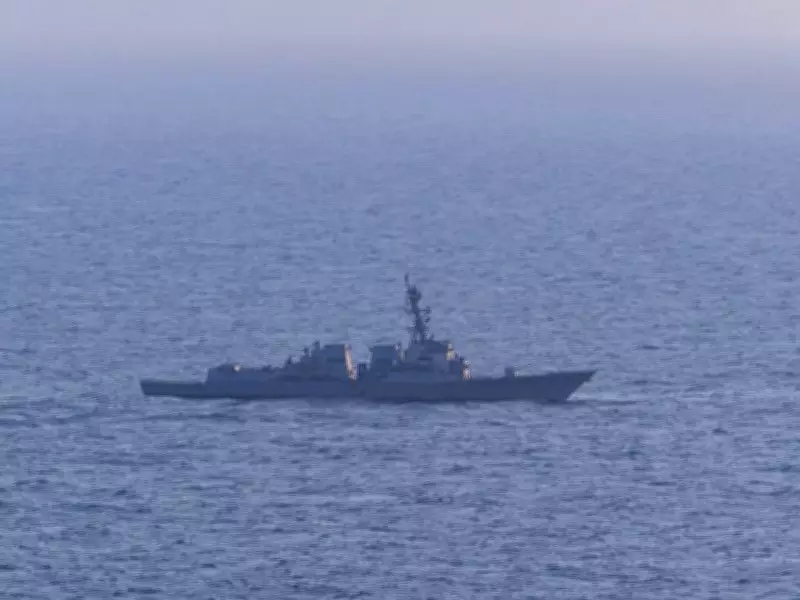
USS Spruance Compels Iranian Cargo Vessel to Reverse Course Amid Naval Blockade
In a significant maritime incident, the United States Navy's guided-missile destroyer, the USS Spruance, has forced an Iranian cargo vessel to turn back during an ongoing naval blockade in the region. This development was officially confirmed by US Central Command, highlighting escalating tensions in strategic waters.
Details of the Confrontation
The encounter occurred as the USS Spruance, a key asset in the US naval fleet, intercepted the Iranian cargo ship while enforcing a naval blockade. According to statements from US Central Command, the Iranian vessel was compelled to alter its course and retreat, preventing it from proceeding further into the blockaded area. This action underscores the heightened vigilance and operational readiness of US forces in monitoring and controlling maritime traffic in the region.
Context of the Naval Blockade
The naval blockade, which has been in effect, aims to restrict the movement of vessels, particularly those suspected of carrying illicit goods or supporting activities deemed threatening to regional stability. The involvement of the USS Spruance, known for its advanced capabilities in anti-submarine and surface warfare, signals a robust US commitment to enforcing these restrictions. This incident adds to a series of similar confrontations that have characterized the tense maritime environment in recent months.

Implications for US-Iran Relations
This forced turn-back of an Iranian cargo vessel is likely to exacerbate existing tensions between the United States and Iran. It reflects ongoing disputes over maritime rights, economic sanctions, and broader geopolitical rivalries. Analysts suggest that such incidents could lead to further escalations, potentially impacting global trade routes and regional security dynamics. The US Central Command's confirmation emphasizes the strategic importance of maintaining a strong naval presence to deter perceived threats.
Regional and Global Reactions
While immediate reactions from Iranian authorities have not been detailed in the initial reports, the incident is expected to draw attention from international observers and neighboring countries. The enforcement of naval blockades by US forces often sparks debates over international law and freedom of navigation, with implications for diplomatic relations across the Middle East and beyond.
In summary, the USS Spruance's action in forcing an Iranian cargo vessel to turn back amid a naval blockade marks a critical moment in ongoing maritime tensions. As US Central Command monitors the situation, the event underscores the complex interplay of military strategy, economic interests, and diplomatic friction in the region.

