

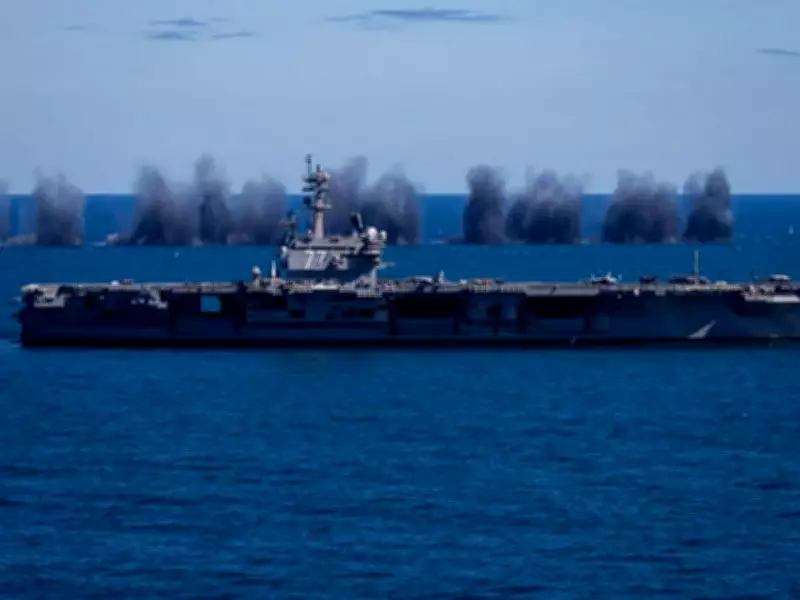
US Navy Unveils $377.5 Billion 'Golden Fleet' Budget with Trump-Class Battleship as Centerpiece
The United States Navy has submitted an expansive budget request totaling $377.5 billion for the upcoming fiscal year, a strategic move aimed at bolstering its naval capabilities in response to evolving global threats. This substantial allocation, often referred to as the "Golden Fleet" budget, is designed to modernize the fleet and ensure American maritime superiority. At the heart of this ambitious proposal is the development of the new Trump-class battleship, which serves as a symbolic and operational anchor for the Navy's future force structure.
Strategic Rationale Behind the Massive Funding Request
The budget request comes at a critical juncture as the US seeks to counter the rising influence and military expansion of rival nations, particularly in the Indo-Pacific region. Navy officials have emphasized that this funding is essential to address challenges such as increased naval activities by competitors, advancements in anti-access/area-denial (A2/AD) systems, and the need for enhanced deterrence. The proposed investments are intended to support a more agile, technologically advanced, and resilient fleet capable of operating in contested environments.
Key components of the budget include:

- Trump-Class Battleship: A new class of heavily armed surface combatants designed to project power and provide formidable firepower in high-threat scenarios.
- Modernization of Existing Assets: Upgrades to current aircraft carriers, submarines, and destroyers to extend their service life and improve combat effectiveness.
- Research and Development: Funding for cutting-edge technologies such as unmanned systems, hypersonic weapons, and cyber warfare capabilities.
- Personnel and Training: Investments in sailor recruitment, retention, and advanced training programs to maintain a highly skilled workforce.
Implications for Global Maritime Security
This budget request, if approved by Congress, could significantly reshape the balance of naval power worldwide. Analysts suggest that the Trump-class battleship, in particular, represents a shift towards a more robust surface warfare posture, potentially altering strategic calculations in key maritime chokepoints. The emphasis on countering "plans rise"—likely referring to the military ambitions of nations like China and Russia—highlights the Navy's focus on preparedness and deterrence.
However, the proposal is not without controversy. Critics argue that such a large expenditure may strain federal finances and divert resources from other national priorities. Additionally, debates are expected over the necessity of a new battleship class versus investing in more distributed and stealthy platforms. Proponents counter that a strong naval presence is indispensable for protecting trade routes, supporting allies, and ensuring national security in an increasingly competitive global landscape.
The budget request underscores the US Navy's commitment to maintaining its status as the world's preeminent maritime force. As geopolitical tensions continue to simmer, the outcome of this funding debate will have far-reaching consequences for international stability and America's ability to project power across the oceans.

