USS Gerald R Ford's Sewage System Failures Persist Amid Middle East Tensions
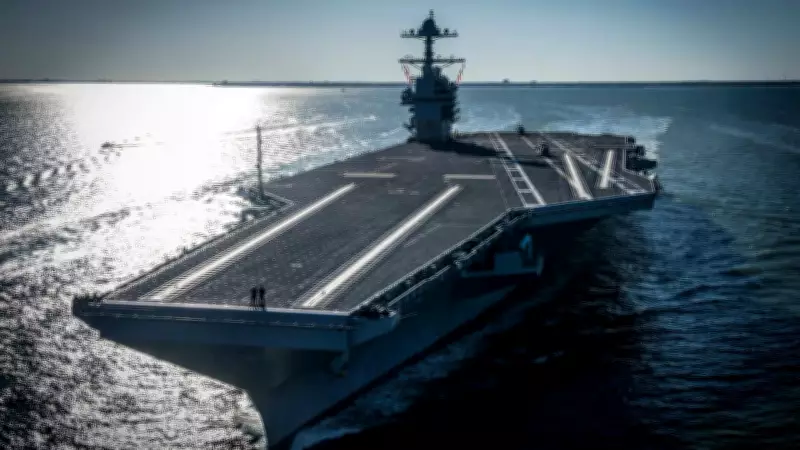
As the United States maintains a formidable naval presence in the Middle East region amid escalating tensions with Iran, its most technologically advanced aircraft carrier is grappling with an unexpected and persistent operational challenge: repeated failures in its onboard sewage system. The USS Gerald R Ford, commissioned in 2017 as the lead vessel of a new class of supercarriers, has been plagued by chronic plumbing breakdowns during its extended deployment, according to multiple media reports.
Chronic Plumbing Issues on a $13 Billion Warship
Constructed at a staggering cost of $13 billion, the carrier introduced several next-generation systems, including a vacuum-based sewage network adapted from cruise ship technology designed to reduce water consumption. However, this innovative system has proven problematic in practice. According to Gulf News, the system's "narrow pipes" have struggled to handle waste from a crew of more than 4,600 sailors, resulting in frequent clogs and vacuum failures that disrupt daily operations.
Internal records obtained by NPR reveal the alarming scale of these technical problems. During one four-day period, engineering teams documented 205 sewage-related breakdowns, requiring personnel to work exhausting 19-hour shifts to manage leaks and overflows. The Navy Times reported that during its 2025 deployment—which included operations off Venezuela that contributed to the capture of President Nicolás Maduro in January—the ship averaged one "sewage-related maintenance call per day." Earlier reports from Forbes in 2022 indicated that severe blockages necessitated specialized acid flushes costing approximately $400,000 each time they occurred.

Extended Mission and Mounting Crew Fatigue
The Wall Street Journal has reported that crew members have confirmed recurring malfunctions, describing increasing frustration as the carrier's deployment was extended for a second time. The current mission is approaching what could become one of the longest continuous deployments in United States Navy history, placing additional strain on personnel already dealing with persistent technical issues.
Since 2023, external technical support has reportedly been summoned 42 times to address these problems, with 32 incidents occurring in 2025 alone. These sewage system failures have continued unabated into 2026, raising questions about long-term solutions for a vessel designed to represent the pinnacle of American naval engineering.
Operational Readiness Questions During High-Stakes Deployment
The USS Gerald R Ford represents a central asset in United States maritime strategy, powered by next-generation nuclear reactors and equipped with advanced aircraft and weapons systems. Despite the persistent plumbing setbacks, the US Navy maintains that the carrier's mission capability remains unaffected and that operational readiness has not been compromised.
However, critics cited in various US media reports have expressed concerns about how these ongoing system failures aboard a multi-billion-dollar platform might affect crew morale during prolonged deployments. These developments occur against a backdrop of heightened geopolitical tension, with US President Donald Trump recently warning of potential "tough action" against Iran and suggesting that "bad things" could happen if meaningful diplomatic progress isn't achieved.
As Iranian and US negotiators prepare for another round of talks in Geneva, the operational challenges facing the USS Gerald R Ford highlight the complex realities of maintaining advanced military assets during extended deployments in strategically sensitive regions. The Navy continues to assert that despite the plumbing issues, the carrier remains fully capable of executing its mission objectives in the Middle East theater.