Massive Anti-War Demonstrations Erupt Across American Cities
In a powerful display of dissent, thousands of American citizens took to the streets in major cities across the United States following coordinated military strikes by the United States and Israel against Iran. The widespread protests, which unfolded in both Los Angeles and New York City, represent a significant domestic response to escalating international conflict.
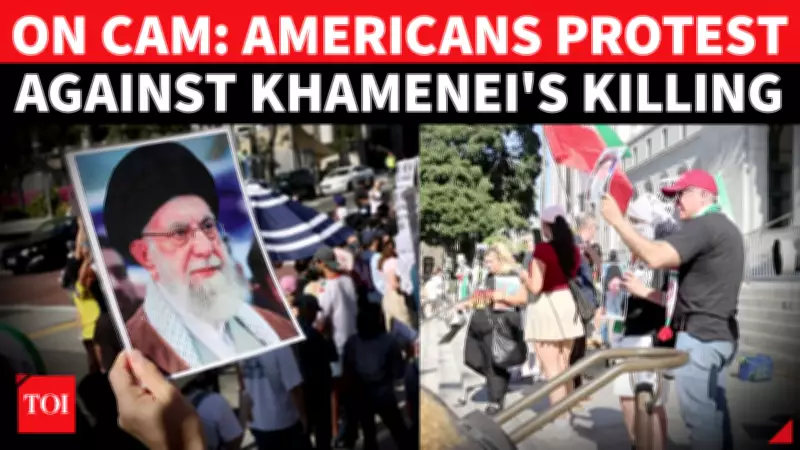
Los Angeles: A Sea of Protest Signs and Political Imagery
The protest movement gained substantial momentum in Los Angeles, where demonstrators gathered with clear anti-war messaging. Participants prominently displayed signs bearing slogans such as "Hands Off Iran" and "Stop the War on Iran," directly challenging the military actions undertaken by their own government. In a particularly notable development, some protesters carried photographs of Ali Khamenei, Iran's Supreme Leader, signaling a complex political stance that extends beyond simple opposition to warfare.
New York City: Times Square Transformed into Protest Epicenter
Meanwhile, on the opposite coast, New York City witnessed one of its largest anti-war gatherings in recent memory. Thousands of protesters converged upon Times Square, transforming the iconic commercial and entertainment hub into a center of political activism. Following initial assemblies, the massive crowd embarked on a organized march through Manhattan, proceeding toward Columbus Circle while maintaining a continuous presence that disrupted normal city operations.

Throughout the demonstrations, participants consistently chanted anti-war slogans and voiced strong criticism against the joint United States-Israeli military strikes. Many protesters warned that continued military action would only serve to deepen the existing crisis rather than resolve underlying tensions, expressing concern about potential escalation and unintended consequences.
Broader Context and Public Sentiment
The nationwide protests reflect growing public apprehension about American military involvement in Middle Eastern conflicts. Demonstrators emphasized diplomatic solutions over military interventions, with many expressing skepticism about the effectiveness of airstrikes in achieving long-term stability. The visible support for Iran's Supreme Leader among some participants adds a complex dimension to the protests, suggesting diverse political perspectives within the anti-war movement.
As tensions continue to mount internationally, these substantial domestic demonstrations highlight significant divisions within American society regarding foreign policy approaches. The scale and visibility of the protests in two of America's largest metropolitan areas indicate that public opposition to military action against Iran has reached a notable threshold, potentially influencing future policy discussions and diplomatic considerations.