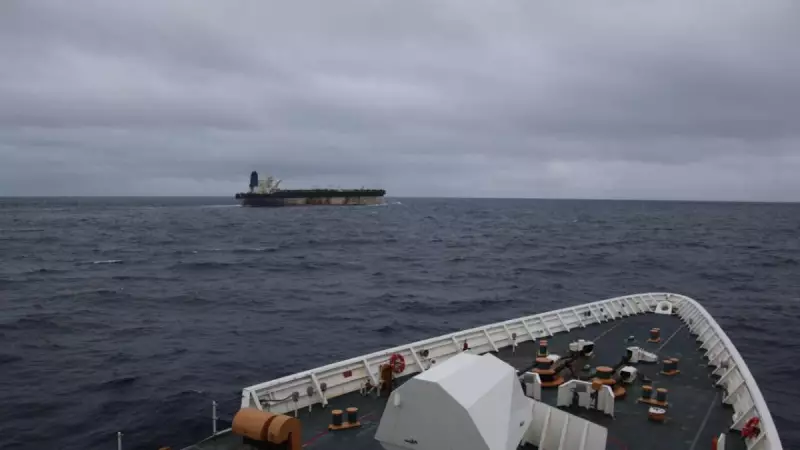
In a dramatic maritime operation with significant geopolitical implications, the United States has successfully seized a crude oil tanker linked to Venezuela. The vessel, named the MV Bella, was captured following an intense, two-week-long chase across international waters. This decisive action by U.S. authorities is seen as a direct enforcement of sanctions against Venezuela's oil sector, but it carries the potential to significantly heighten diplomatic friction with nations like Russia and Iran.
The Dramatic Chase and Capture of the MV Bella
The saga of the MV Bella, also identified as the Marinera, began when U.S. officials determined it was transporting a cargo of Venezuelan crude oil. The United States has maintained strict sanctions on Venezuela's state-run oil company, PDVSA, aiming to curb the revenue flowing to President Nicolas Maduro's government. Acting on intelligence, U.S. forces initiated pursuit of the tanker.
The chase lasted for approximately 14 days, traversing significant stretches of ocean before the vessel was finally intercepted and seized. The precise location of the capture has not been fully disclosed, but the operation underscores the global reach of U.S. sanctions enforcement. The tanker's seizure represents a tangible blow to the networks that have been facilitating the export of Venezuelan oil, often through complex ship-to-ship transfers intended to obscure the origin of the cargo.

Geopolitical Ramifications: A Direct Challenge to Russia and Iran?
This move by Washington extends far beyond Venezuela. Analysts warn it could act as a major flashpoint, escalating existing tensions with both Russia and Iran. Both nations are key allies of the Maduro regime and have been instrumental in helping Venezuela circumvent U.S. oil sanctions.
Russia, in particular, has substantial energy and military interests in Venezuela. Russian companies have been involved in trading Venezuelan oil, and the seizure of a cargo potentially linked to Russian interests is viewed as a provocative act. This incident could lead to retaliatory measures from Moscow, further straining a relationship already deeply fractured by the war in Ukraine and other global disputes.
Similarly, Iran has been a lifeline for Venezuela, providing technical support and exchanging its heavy crude for Venezuelan oil. Any disruption to this sanctioned trade network directly impacts Tehran's strategic calculations. The seizure demonstrates the U.S.'s willingness to physically intercept sanctioned commodities, a policy that could lead to dangerous confrontations in the future.
Broader Implications for Global Oil Trade and Sanctions
The capture of the MV Bella is not an isolated event but part of a broader, more aggressive U.S. strategy to enforce economic sanctions through military and law enforcement means. It sends a clear message to shipowners, insurers, and traders globally that facilitating trade with sanctioned entities like PDVSA carries substantial operational and financial risks.
For the global oil market, such actions contribute to volatility and can create shadow fleets of vessels operating outside international norms. It forces a recalibration among international actors who may be indirectly supporting Venezuela's oil exports. The two-week pursuit itself highlights the extensive resources the U.S. is committing to this enforcement regime.
Ultimately, the seizure underscores the complex, high-stakes game being played on the world's oceans. While aimed at pressuring Caracas, its most profound consequences may be felt in the diplomatic standoffs with Moscow and Tehran. The coming weeks will reveal whether this bold seizure remains a singular enforcement action or becomes the catalyst for a new, more contentious phase in great power rivalry, with global energy flows as the battlefield.