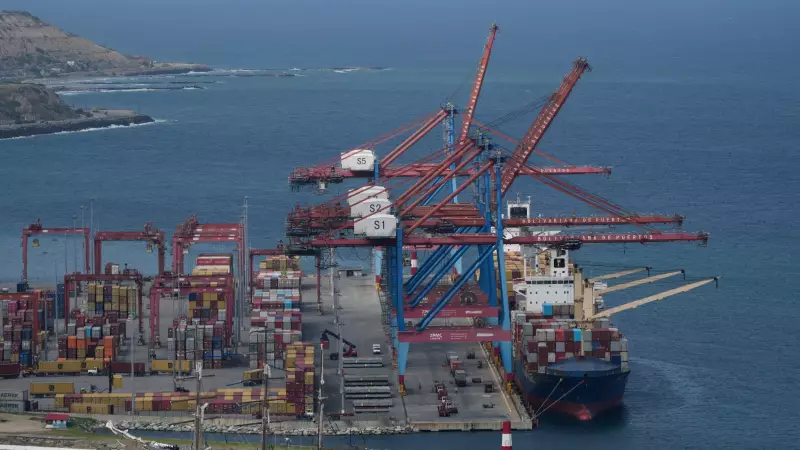
In a significant escalation of maritime enforcement, the United States government has seized another vessel off the coast of Venezuela. The action targets a ship accused of violating international sanctions imposed on the Nicolas Maduro-led government.
Details of the Vessel Seizure
The vessel in question is identified as the crude oil tanker 'M/T Heroic Idun'. According to the US Department of Justice, the seizure was executed based on a warrant issued by a federal court in the District of Columbia. The legal basis stems from violations of sanctions administered by the US Treasury's Office of Foreign Assets Control (OFAC).
This incident follows a similar seizure just weeks prior, indicating a ramped-up enforcement campaign in the Caribbean region. The US authorities allege that the tanker was involved in operations designed to circumvent the economic restrictions placed on Venezuela's state-owned oil company, PDVSA. The primary goal of these sanctions is to curtail the Maduro government's primary source of revenue.

Pattern of Enforcement and Regional Impact
The back-to-back seizures underscore Washington's commitment to tightening the noose around Caracas's oil exports. The US has long maintained that the revenue from these illicit oil shipments funds an undemocratic regime and contributes to regional instability.
This latest enforcement action is not an isolated event but part of a broader, coordinated strategy. It involves close collaboration between various US agencies, including the Department of Justice, the Department of Homeland Security, and the Coast Guard. The operations send a clear signal to global shipping and trading companies about the serious risks of engaging with sanctioned Venezuelan entities.
The maritime domain around Venezuela has become a focal point for this geopolitical struggle. The US is leveraging its legal and naval capabilities to interdict shipments, while Venezuela and its partners attempt to find new, clandestine routes for its oil.
Consequences and the Road Ahead
The immediate consequence is the loss of a valuable asset for the operators linked to the sanctioned trade. The seized vessel will likely face forfeiture proceedings, and the companies involved could be subject to heavy fines and further legal action.
For the Venezuelan government, each successful seizure represents a direct hit to its fragile economy. It increases the cost and complexity of exporting oil, forcing it to rely on more covert and expensive methods. For the global oil market, these actions contribute to a tightening of heavy crude supplies, albeit on a relatively small scale.
Analysts suggest that the pressure is unlikely to abate in the near future. The US appears determined to use all available tools, including maritime interdiction, to uphold its sanctions policy. This creates a challenging environment for shipping in the region, requiring companies to exercise extreme due diligence to avoid legal entanglements.
Ultimately, these seizures highlight the extraterritorial reach of US sanctions and the willingness to enforce them militarily and legally far from American shores. The situation sets a precedent for how Washington might approach sanctions enforcement against other adversarial states in the future.