

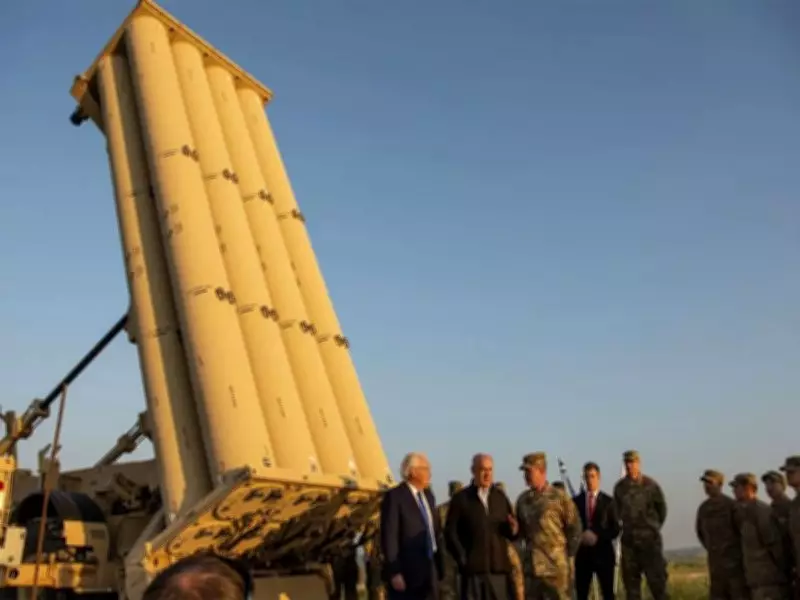
The United States expended nearly half of the Pentagon's missile defense interceptor arsenal while defending Israel during the recent conflict with Iran, according to a new report. This significant depletion has raised alarms about the readiness of American missile defense systems for future threats.
Critical Defense Operation
During the Iranian missile and drone assault on Israel in April, US naval and ground-based forces fired a substantial number of interceptors to protect Israeli territory. The operation, which involved coordination between US Central Command and Israeli defense forces, successfully neutralized a large portion of the incoming projectiles. However, the cost in terms of interceptor stockpiles was high.
Impact on US Readiness
Pentagon officials have acknowledged that the extensive use of Standard Missile-3 (SM-3) and Patriot Advanced Capability-3 (PAC-3) interceptors has strained the inventory. The SM-3, designed for midcourse interception of ballistic missiles, and the PAC-3, used for terminal phase defense, were both deployed in large numbers. Defense analysts warn that replenishing these stocks could take years and cost billions of dollars.

The report highlights that the US currently has limited capacity to respond to simultaneous large-scale attacks on multiple fronts. This vulnerability is particularly concerning given rising tensions with China over Taiwan and continued Russian aggression in Ukraine.
Strategic Implications
The depletion of interceptor stockpiles may force the Pentagon to reassess its global missile defense posture. Options include accelerating production lines, prioritizing allies' requests for missile defense systems, or relying more on non-kinetic countermeasures like electronic warfare. The incident also underscores the importance of allied contributions to collective defense, as Israeli systems also played a crucial role in the engagement.
Future Procurement Needs
The US Navy plans to increase its inventory of SM-3 Block IIA interceptors, which offer improved range and accuracy. Meanwhile, the Army is modernizing its Patriot systems with the PAC-3 Missile Segment Enhancement (MSE) variant. However, budget constraints and industrial base limitations may hinder rapid expansion.
Defense experts emphasize that the US must balance its commitments to allies with maintaining sufficient domestic stockpiles. The Iran-Israel incident serves as a stark reminder of the high cost of modern missile defense and the need for strategic stockpile management.

