Trump Administration Announces Major Drawdown of Immigration Officers in Minnesota
The Trump administration will withdraw around 700 federal immigration enforcement officers from Minnesota, a significant reduction prompted by what officials describe as unprecedented collaboration from state and local authorities. White House border czar Tom Homan made the announcement on Wednesday, stating that the move will decrease the federal presence in the state from roughly 3,000 officers to approximately 2,000.
Cooperation Leads to Reduced Federal Deployment
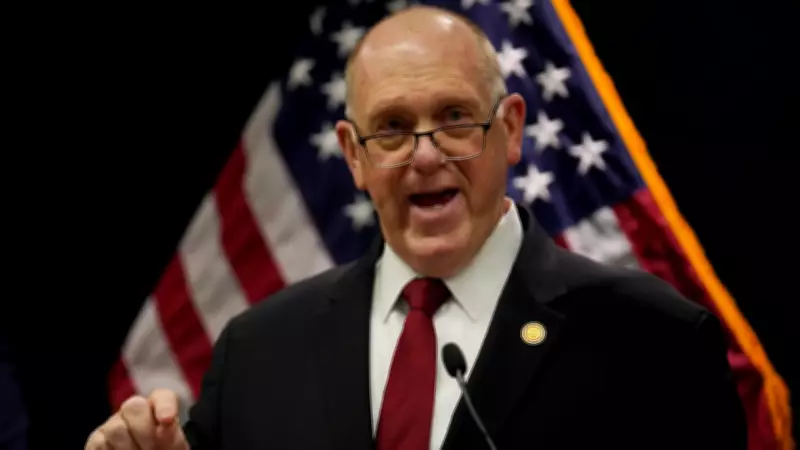
At a news conference, Homan explained that the drawdown was directly linked to enhanced cooperation from local law enforcement agencies, particularly county sheriffs who operate jails. He emphasized that this collaboration has created a safer environment, reducing the need for as many public safety officers.
"Given this increase in unprecedented collaboration, and as a result of the need for less public safety officers to do this work and a safer environment, I am announcing, effective immediately, we'll draw down 700 people," Homan said, according to the Associated Press.

Homan had previously indicated that a reduction in federal agents would only be considered if Minnesota officials cooperated with immigration authorities, especially by transferring arrested immigrants to Immigration and Customs Enforcement (ICE) custody. He reiterated this approach, arguing that cooperation through jails minimizes the necessity for agents to conduct arrests in public spaces.
"I push for jails to alert ICE to inmates who could be deported," Homan stated, adding that such transfers are safer for both officers and the public. He also expressed confidence in the effectiveness of the immigration enforcement operation in Minnesota, citing numerous individuals removed from the streets of the Twin Cities as evidence of its public safety benefits.
Protests and Fatalities Escalate Tensions
The large-scale federal deployment in and around Minneapolis and St. Paul has sparked weeks of protests, with tensions intensifying following the killing of protester Alex Pretti. Pretti's death marked the second fatal shooting by federal officers in Minneapolis during recent enforcement operations.
According to Reuters, two U.S. citizens were killed by federal agents amid the protests, fueling criticism of the administration's approach. Minnesota, which is governed by Democrats, has filed a lawsuit against the Trump administration over the surge in immigration enforcement personnel, arguing that the deployment has destabilized communities and undermined local authority.
Sanctuary Policies and Ongoing Enforcement Efforts
The White House has repeatedly blamed so-called "sanctuary jurisdictions" for hindering the arrest and deportation of undocumented immigrants. Cities like Minneapolis limit cooperation with federal immigration authorities, prohibiting local officials from inquiring about immigration status or assisting with enforcement, citing public safety concerns. Local leaders contend that such policies encourage migrants to report crimes without fear of deportation.
Despite the partial withdrawal, Homan stressed that the administration's broader immigration agenda remains unchanged. "Let me be clear, President Trump fully intends to achieve mass deportations during this administration, and immigration enforcement actions will continue every day throughout this country," he said, as reported by Reuters.
He clarified that the decision to reduce the number of agents in Minnesota does not signal a policy shift but reflects tactical adjustments based on local cooperation. Federal officials confirmed that enforcement operations will persist across the state, with about 2,000 agents remaining in place, even as discussions with local authorities over jail cooperation and custody transfers continue.
The ongoing dialogue between federal and local entities highlights the complex dynamics of immigration enforcement in the United States, balancing federal objectives with community-level considerations.