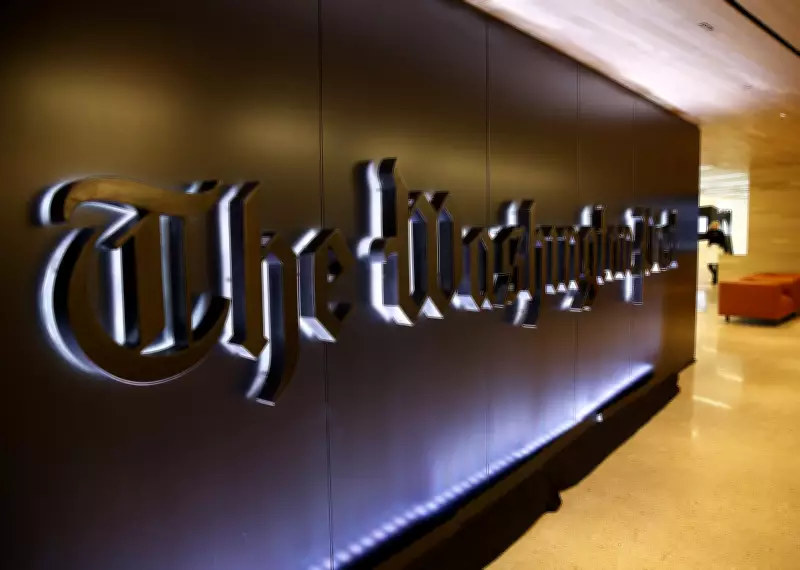
Washington Post Mass Layoffs: A Historic Blow to Journalism and Global News Coverage
The world of journalism was plunged into a state of profound hopelessness and despair last week as The Washington Post, an institution long celebrated for its bravery, stylishness, and unwavering commitment to quality reporting, announced devastating personnel layoffs. This sweeping retreat marks a stark and painful contrast to the soaring ambitions that accompanied Jeff Bezos's acquisition of the newspaper just over a decade ago.
Unprecedented Staff Cuts and Shrinking Ambitions
Last week's sweeping staff cuts eliminated approximately 300 positions, representing more than one-third of the entire newsroom. According to Paul Farhi, a former Post staffer specializing in media coverage, this constitutes "the single largest one-day layoff of journalists in American history." These drastic reductions come on top of earlier defections by many of the newspaper's most talented journalists, creating a perfect storm of talent drain and diminished capacity.
The consequences are immediate and far-reaching. The sports department and books section are being completely shuttered. The metro team, which once boasted about 200 journalists in the early 2000s to cover Washington D.C.'s complex landscape, will be reduced to just a tenth of that size. International reporting faces similar decimation, with coverage of critical regions including the Middle East, Sydney, China, and New Delhi being eliminated entirely.

The Bezos Era: From Grand Ambitions to Grim Reality
When Jeff Bezos purchased The Washington Post from the esteemed Graham family in October 2013 for $250 million, he envisioned transforming the newspaper into a publication with nationwide and even worldwide reach. Martin Baron, the highly regarded former editor of the Post, recalled in his 2023 book how Bezos brashly told editors that their market might encompass "the English-speaking world."
Those expansive ambitions have now withered dramatically. Despite Bezos's immense personal wealth of approximately $250 billion, The Washington Post has consistently lost millions of dollars under his ownership. Print circulation has plummeted to under 100,000, a mere fraction of what it was when he acquired the paper. The billionaire owner has grown increasingly disinterested in covering these annual losses, leading to this historic retrenchment.
The Ripple Effects Across Journalism
The implications of these layoffs extend far beyond The Washington Post's newsroom:
- Sports Journalism Transformation: The closure of one of America's strongest sports sections signals a fundamental shift in how sports are covered. As sports teams and leagues increasingly control their own narratives, traditional journalistic coverage faces existential threats.
- Talent Pipeline Disruption: The layoffs could have incalculable consequences for future generations of journalists. For decades, The Washington Post's courageous coverage of Watergate and official Washington inspired countless young people to enter journalism. No journalistic outlet currently plays that inspirational role with similar impact.
- Democracy in Peril: The newspaper's powerful slogan "Democracy Dies in Darkness" now rings hollow and ironic. Bezos's apparent interest in using the newspaper as a political instrument to advance his other business interests has created deep staff resentment and raised serious questions about editorial independence.
The Changing Media Landscape
With The Washington Post now on life support, only one American newspaper—The New York Times—continues to publish a comprehensive daily news menu while maintaining financial stability. The Times has successfully transformed itself through digital offerings, particularly food recipes and games, with financial markets now viewing it as a lifestyle brand competing for customers' leisure time rather than a traditional newspaper company.

This represents a fundamental redefinition of journalism's role in society. As wealthy owners like Bezos lose interest in sustaining traditional news organizations, and as digital transformation reshapes media economics, the very nature of how we receive information about our world is undergoing radical change.
The Washington Post layoffs serve as a sobering reminder that even the most storied journalistic institutions are not immune to the seismic shifts transforming media worldwide. As global coverage shrinks and newsrooms contract, society faces the very real prospect of knowing significantly less about the complex world we inhabit.