

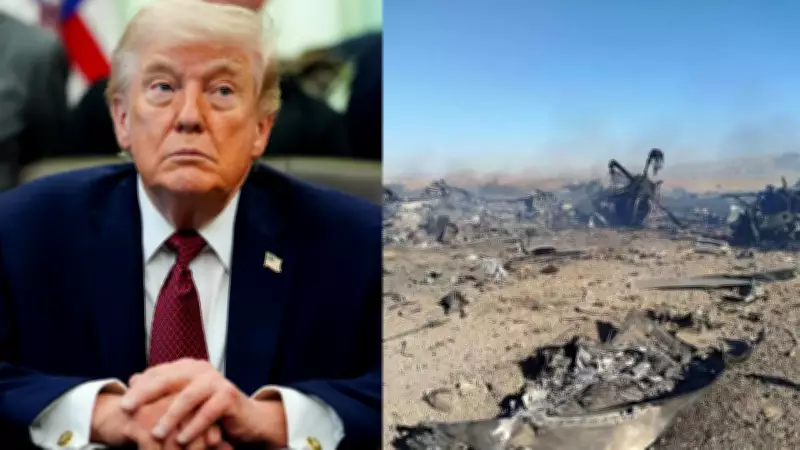
White House in Turmoil Following US Jet Downing Over Iran
The downing of a US military aircraft over Iranian territory triggered significant chaos within the White House, with President Donald Trump reportedly screaming at aides and being deliberately excluded from critical planning sessions as officials scrambled to organize a high-risk rescue mission for two missing American airmen. According to a detailed report from The Wall Street Journal, the incident unfolded on Good Friday, immediately placing the administration on high alert.
Trump's Demand for Immediate Action
Upon being informed that two US service members were missing after the jet was shot down, President Trump demanded that the military "go get them immediately," pushing aggressively for rapid deployment despite the extreme complexities of operating covertly inside hostile Iranian territory. US forces had not conducted ground operations in Iran for decades, forcing military planners to urgently assess how to enter the region undetected by Iranian forces and execute a successful extraction.
Aides Limit Trump's Involvement in Planning
Senior administration officials, concerned that President Trump's impatience could disrupt the meticulous planning required for such a dangerous mission, made the decision to keep him out of detailed operational discussions. Instead, aides received minute-by-minute updates and briefed the president only at key strategic moments. This approach was designed to maintain focus and prevent impulsive decisions that might compromise the mission's safety and success.

Fears of a 1979 Hostage Crisis Repeat
The incident vividly resurrected President Trump's deep-seated fears of a repeat of the 1979 Iran hostage crisis under President Jimmy Carter, which he has frequently described as a political disaster. In March, Trump had reportedly referenced the crisis, stating, "If you look at what happened with Jimmy Carter…with the helicopters and the hostages, it cost them the election," and calling the historical situation "a mess." This historical parallel added intense pressure to the rescue efforts, with the administration keen to avoid a similar protracted and publicly damaging scenario.
High-Stakes Rescue Operation Unfolds
One of the downed airmen was recovered relatively quickly, but the second remained behind enemy lines for more than 24 hours. The rescue was finally executed late Saturday in a tense, high-stakes extraction operation that successfully retrieved the service member, thereby averting what could have become a major political and military setback for the Trump administration. The mission's success provided a temporary relief amid the escalating tensions.
Trump Returns to Aggressive Posture
Within hours of the successful rescue, President Trump returned to a confrontational stance, issuing a profanity-laced warning to Iran over the strategic Strait of Hormuz in a social media post. The language and tone of the post drew significant attention and criticism, highlighting the administration's volatile approach to international crises. Critics argue that this response lacks strategic coherence, with analyst Kori Schake telling The Wall Street Journal that battlefield gains have not translated into a clear, sustainable path to victory in the region.
White House Defends Presidential Leadership
The White House has vigorously defended President Trump's handling of the situation. Press Secretary Karoline Leavitt asserted that the president has remained a steady and decisive leader throughout the conflict, emphasizing his commitment to protecting American personnel. However, the internal chaos and exclusionary tactics during the planning phase suggest a more complex and fraught decision-making process behind the scenes.
Ongoing Tensions in the Strait of Hormuz
In the latest developments, tensions around the vital Strait of Hormuz remain critically elevated. The US military has recently seized an Iranian vessel in the strait, further exacerbating the already strained relations between the two nations. This action underscores the persistent risk of escalation in one of the world's most crucial maritime chokepoints, with potential implications for global oil supplies and regional stability.

The entire episode reveals the intense pressures and internal dynamics within the Trump administration when faced with military crises in hostile regions, balancing immediate rescue imperatives against long-term strategic risks.
