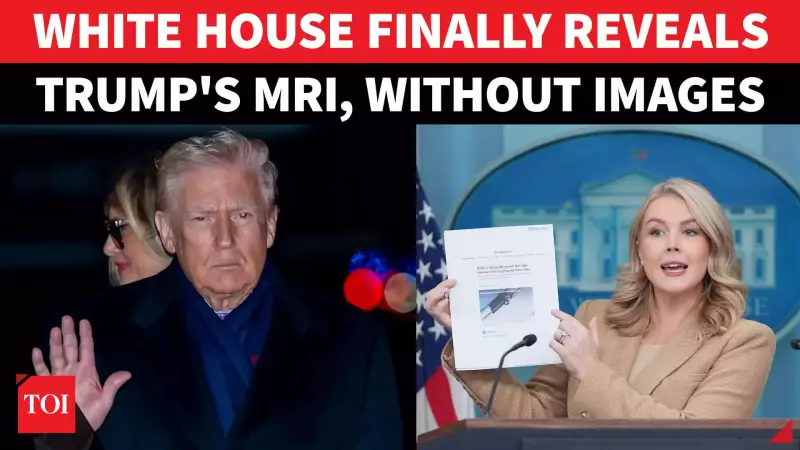
In a significant development, the White House has finally provided new information regarding the advanced medical imaging that President Donald Trump underwent in October. The move comes after intense speculation and political pressure concerning the reasons behind the 79-year-old president's MRI scan at Walter Reed National Military Medical Center.
Leavitt's Forceful Briefing and Medical Details
During a press briefing on Monday, Press Secretary Karoline Leavitt publicly read from the president's medical summary. She stated that the MRI was a standard component of a "comprehensive executive physical." Leavitt emphasized that for men of President Trump's age, such detailed evaluations of cardiovascular and abdominal health are considered beneficial and part of thorough preventive care.
However, the administration stopped short of releasing the actual MRI images to the public. This update was delivered following a weekend where the issue gained considerable political traction. Minnesota Governor Tim Walz, who is now the Democratic candidate for vice president, had openly challenged Trump to disclose the full medical results. Walz referenced the president's own previous comment where he claimed he "had no idea" what the purpose of the MRI was.

"Fake News" and Political Counterattack
Karoline Leavitt did not hold back in her criticism of the media's focus on the president's health and schedule. She labelled the intense scrutiny as "fake news," drawing a sharp comparison to how other news outlets had previously described President Joe Biden. Leavitt reminded reporters that these same organisations had declared Biden "healthy and vigorous" even after a notable fall on the stairs of Air Force One.
The press secretary's comments mark a clear escalation in the White House's strategy to control the narrative around the president's health, framing questions about it as politically motivated rather than based on genuine medical concern.
Implications and Ongoing Political Battle
The release of these details, timed for December 2, 2025, is seen as a direct response to the mounting pressure from political opponents like Tim Walz. By providing a clinical rationale—preventive care for an older male—the White House aims to neutralise the issue before it gains more momentum in the heated 2024 election cycle.
Nevertheless, the decision not to release the scan images ensures that questions may persist. The episode highlights how a candidate's health remains a potent and deeply politicised topic in American politics, with both sides using it to question the other's fitness for office. The White House's aggressive pushback signals its intent to confront such lines of inquiry head-on, branding them as illegitimate from the start.