

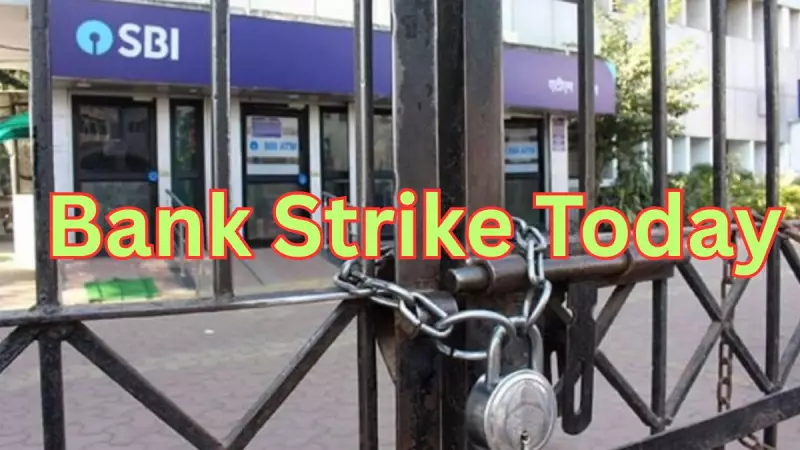
Banking Services Grind to a Halt as UFBU Strike Declares Nationwide Bank Holiday on January 27
In a significant development impacting the financial sector, banking operations across India were severely disrupted on January 27, 2026, due to a nationwide strike called by the United Forum of Bank Unions (UFBU). This industrial action led to a declared bank holiday, affecting millions of customers and businesses reliant on daily banking services.
Scope and Impact of the Nationwide Strike
The strike, organized by the UFBU—a collective body representing various bank employee unions—resulted in the closure of numerous bank branches and offices throughout the country. Key services such as cash withdrawals, deposits, cheque clearances, and loan processing were brought to a standstill, causing inconvenience to the public and highlighting the critical role of banking in the economy.
Reports indicate that the disruption was widespread, with both public and private sector banks participating in the strike to varying degrees. This coordinated action underscores the unions' demands, which typically focus on issues like wage revisions, job security, and opposition to privatization policies in the banking sector.

Reasons Behind the United Forum of Bank Unions' Call to Action
The UFBU's decision to call for a strike on January 27 stems from longstanding grievances within the banking community. Primary concerns often include demands for better working conditions, timely salary hikes, and resistance to government initiatives that unions perceive as detrimental to public sector banks.
- Wage revision negotiations that have stalled or remained unresolved.
- Apprehensions over the privatization of public sector banks, which could impact job stability.
- Issues related to pension schemes and other employee benefits that require attention from authorities.
By declaring a bank holiday through this strike, the UFBU aims to draw public and governmental attention to these pressing matters, leveraging the disruption as a tool for negotiation and advocacy.
Customer and Economic Implications of the Banking Disruption
The nationwide strike on January 27 had far-reaching consequences beyond just bank closures. Customers faced challenges in accessing essential financial services, with many resorting to digital platforms, though these too might have experienced limitations due to the scale of the strike.
From an economic perspective, such disruptions can temporarily slow down transactions, affect liquidity in markets, and delay business operations that depend on timely banking support. This event serves as a reminder of the interconnectedness of banking services with daily economic activities and the potential ripple effects of labor actions in critical sectors.
In response, banks and regulatory bodies often issue advisories to mitigate the impact, encouraging the use of alternative channels like ATMs and online banking, but the effectiveness of these measures can vary based on the strike's intensity and duration.
Looking Ahead: Resolutions and Future Scenarios
As the strike concludes, attention turns to potential resolutions between the UFBU and banking authorities. Historical precedents suggest that such strikes often lead to renewed dialogues, with outcomes ranging from partial concessions to comprehensive agreements addressing union demands.
- Immediate steps may involve negotiations to prevent further disruptions and restore normal banking operations swiftly.
- Long-term solutions could focus on policy reforms that balance employee welfare with the efficiency and competitiveness of the banking sector.
- Stakeholders, including customers and businesses, will be monitoring developments closely to anticipate any future actions that might affect financial stability.
This incident on January 27 underscores the ongoing tensions within India's banking industry and the need for sustainable strategies to harmonize labor relations with service delivery. As the situation evolves, updates from the UFBU and banking institutions will be crucial in shaping the sector's trajectory in the coming months.






