

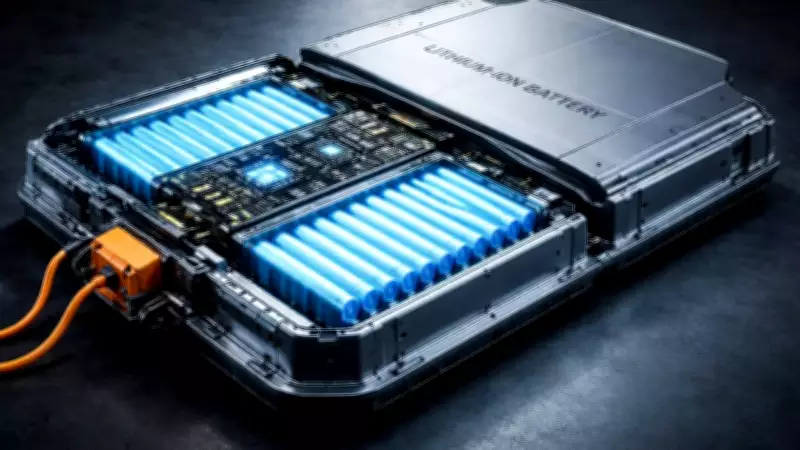
The automobile industry has hailed the Union Budget 2026-27 for its strategic focus on bolstering India's electric vehicle (EV) infrastructure through key fiscal measures. The Society of Indian Automobile Manufacturers (SIAM) stated on Sunday that the extension of customs duty exemptions on goods used to produce lithium batteries would enable the creation of a robust EV ecosystem in the country.
Key Budget Proposals for EV Sector
Finance Minister Nirmala Sitharaman, while delivering the Budget speech, proposed to extend the basic customs duty exemption given to capital goods used for manufacturing lithium-ion cells for batteries. This exemption now also applies to those used for manufacturing lithium-ion cells for battery energy storage systems.
"Continued exemption of basic customs duty on capital goods used for manufacturing lithium-ion batteries, along with the extension of concessional duty benefits for lithium-ion cells and their parts used in manufacturing batteries for electric and hybrid vehicles for a further two years till March 2028, will enable creation of a robust EV ecosystem in the country," SIAM President Shailesh Chandra said in a statement.

Industry Leaders Welcome Policy Continuity
The Federation of Automobile Dealers Associations (FADA) President CS Vigneshwar welcomed the government's commitment to the electric vehicle ecosystem. "This, combined with the establishment of rare earth corridors in mineral-rich states to support permanent magnet manufacturing, will significantly bolster domestic EV production and affordability," he added.
Deloitte Partner Harpreet Singh noted that the extension of customs duty exemptions on lithium-ion cells and key inputs used in lithium battery and EV manufacturing till March 31, 2028 provides much-needed policy continuity to the electric mobility ecosystem.
Broader Economic Impact
The Union Budget 2026-27 continues to focus on long-term, sustained economic growth with a strong emphasis on manufacturing, infrastructure including freight corridors and waterways, and fiscal prudence, according to industry observers.
"The decision to raise the capital expenditure target to Rs 12.2 lakh crore for 2026-27 from Rs 11.2 lakh crore in the current year will provide a strong impetus to demand creation and industrial activity, including the automobile sector," Chandra stated.
Support for Sustainable Mobility
The allocation of 4,000 e-buses for the Purvodaya states will accelerate the transition toward sustainable public mobility solutions. "The push for green mobility is further strengthened by the provision of 4,000 e-buses for the Northeast and Purvodaya regions, and the exclusion of biogas value from central excise duty on blended CNG," Vigneshwar said.
These measures, alongside the India Semiconductor Mission 2.0, will help stabilise the supply chain for modern vehicles, according to industry experts.
Manufacturing and Export Focus
ACMA President Vikrampati Singhania said the Union Budget 2026-27 lays a clear and credible roadmap for strengthening India's manufacturing ecosystem. "The sustained focus on MSMEs, clean mobility, and export facilitation will help the auto component industry navigate global headwinds while positioning India as a competitive and trusted manufacturing and sourcing destination," he added.
Mahindra Group CEO & MD Anish Shah noted that the Budget focuses on enhancing India's competitiveness in the world, takes meaningful steps towards self-reliance, and enables wider participation in the benefits of economic growth.
Infrastructure Development Benefits
Mercedes-Benz India MD and CEO Santosh Iyer highlighted the Budget's strong focus on infrastructure development, with an addition of Rs 1 lakh crore in capex. "Better highways and improved intercity connectivity have historically driven luxury car demand in India," he added.
Hero MotoCorp CEO Harshavardhan Chitale said the Budget presents a balanced and forward-looking roadmap, welcoming the strong emphasis on continuity and predictability in fiscal and industrial policy.

Specialized Manufacturing Support
JCB India MD and CEO Deepak Shetty noted significant benefits for the construction equipment industry, with a focus on domestic manufacturing of high-value capital goods such as tunnel boring machines, earthmoving equipment, and crane systems.
Vijay Thakur, Co-Founder & CEO of Tsuyo Manufacturing, stated: "The push for advanced electronics, rare-earth supply security, and EV component support will significantly benefit domestic electric motor manufacturing for two-wheelers, three-wheelers, and commercial EVs."
The startup also appreciates the REPM scheme's emphasis on critical mineral recycling, reinforcing a circular economy and enhancing sustainability across the e-mobility value chain, he added.





