

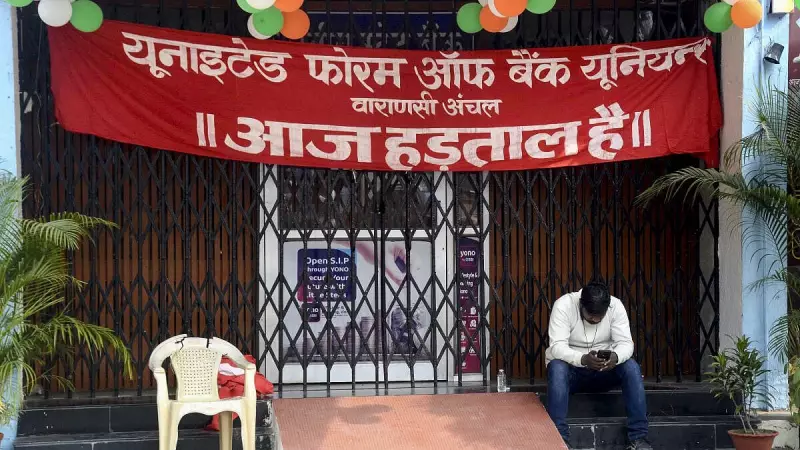
Banking Services Face Nationwide Disruption as Unions Strike for 5-Day Work Week
Banking operations across India have been significantly impacted as workers' unions observe a nationwide strike, demanding the implementation of a five-day work week. The strike, organized by the United Forum of Bank Unions (UFBU), an umbrella body representing nine unions of officers and employees, has led to disruptions in various banking services, affecting customers and financial transactions.
Failed Conciliation Talks Trigger Strike Action
The strike materialized after a conciliation meeting with the Chief Labour Commissioner on January 23, 2026, failed to yield a positive outcome. The UFBU had been engaged in negotiations with banking authorities and government representatives to address their long-standing demand for reduced working hours, but the talks reached an impasse, prompting the unions to proceed with the industrial action.
Key demands of the striking unions include:

- Implementation of a five-day work week for all banking employees
- Improved working conditions and better work-life balance
- Addressal of pending wage revision issues
- Enhanced job security and career progression opportunities
Impact on Banking Operations and Customer Services
The nationwide strike has resulted in partial to complete shutdowns of bank branches in many regions, with services such as cash withdrawals, deposits, loan processing, and cheque clearances being affected. While some essential services may continue through digital channels or skeletal staff, the overall efficiency of banking operations has been compromised.
Customers are advised to plan their banking activities accordingly and utilize online banking platforms where possible to minimize inconvenience during the strike period.
Historical Context and Union Perspectives
This strike is part of a broader movement by banking unions to modernize work schedules in line with global standards and improve employee welfare. The UFBU has emphasized that a five-day work week would not only benefit employees but also enhance productivity and service quality in the banking sector.
The unions argue that with the increasing digitization of banking services, the traditional six-day work week is outdated and places undue stress on employees. They point to successful implementations in other sectors and countries as evidence that reduced work hours can coexist with operational efficiency.
Government and Banking Authorities' Response
As the strike continues, banking authorities and government officials are monitoring the situation closely. There have been calls for renewed dialogue between the unions and management to resolve the issue amicably and restore normal banking services.
The outcome of this strike could set a precedent for labor relations in the financial sector and influence future policies regarding work hours across industries in India.






