

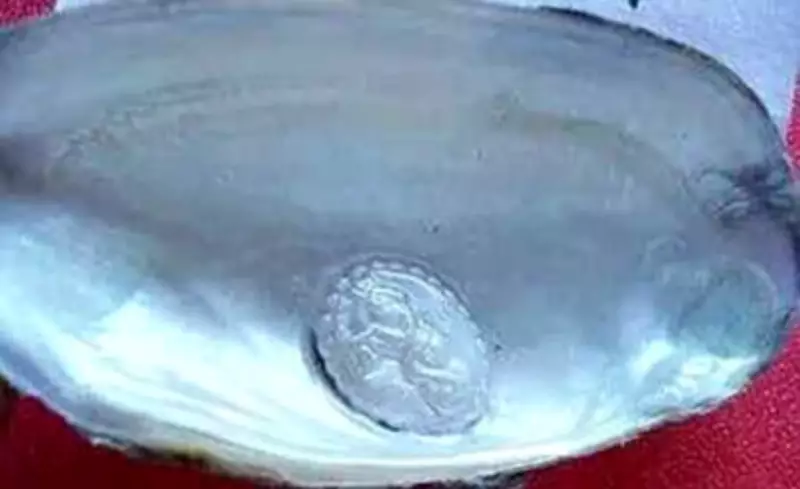
Patna: Pearls, long regarded as a symbol of luxury and elegance, may soon become a new source of income for farmers in Bihar. In an effort to diversify agricultural activities and enhance rural incomes, the state government has included pearl farming under its Fish Species Diversification Scheme and approved an allocation of Rs3.89 crore for its promotion.
The initiative aims to encourage farmers to adopt innovative farm practices. According to Tushar Singla, director of the department of dairy, fisheries and animal resources, pearl farming has been brought under the ambit of the state’s ‘Saat Nishchay-2’ programme to organise and promote the activity on a larger scale.
“The initiative will provide farmers with a good alternative to traditional farming and create better opportunities for higher income,” Singla said.

How Pearls Are Formed
Fishery experts describe pearl formation as one of nature’s most fascinating processes. A pearl is created when a natural foreign particle enters the shell of an oyster or mussel living in rivers, ponds or seas. Unable to expel the intruder, the mollusk secretes a lustrous substance around it as a protective mechanism. Over time, layer upon layer of this material accumulates, eventually forming a pearl. What begins as an irritant ultimately transforms into one of nature’s most valuable gems.
Natural pearls are extremely rare and can fetch very high prices in the market. Most pearls sold today are cultured pearls, produced through scientific techniques that induce pearl formation inside oysters under controlled conditions.
Technology and Subsidy Details
Domain experts said India’s freshwater pearl culture technology was first developed in 1992 by the Central Institute of Freshwater Aquaculture (CIFA), Bhubaneshwar. Bihar is now seeking to popularise this technology among farmers as a viable income-generating activity.
Under the scheme, farmers undertaking pearl cultivation will receive a subsidy of up to 60% of the unit cost. The government has fixed the unit cost at Rs2.24 lakh for a 0.5-acre farming unit, making the venture more accessible and financially attractive for aspiring pearl farmers across the state.






