

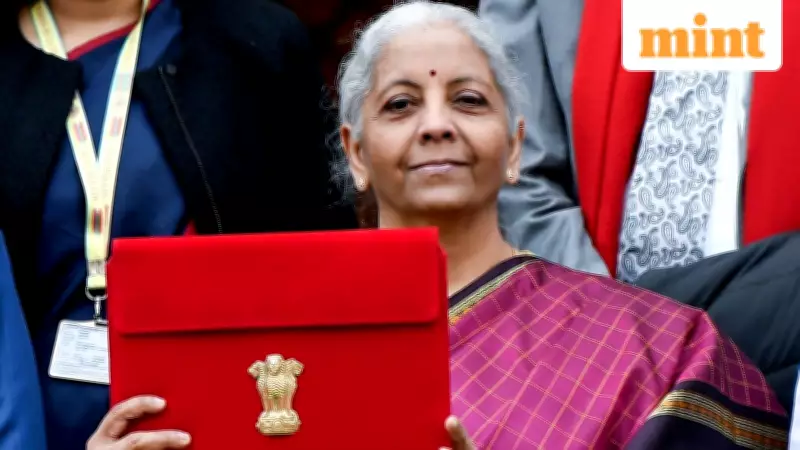
Finance Minister Nirmala Sitharaman presented her ninth consecutive budget on Sunday, outlining a comprehensive roadmap for technological advancement in India. The budget speech highlighted several pivotal developments and proposals specifically targeting the semiconductor, artificial intelligence (AI), electronics, and digital sectors, aiming to bolster India's position as a global tech hub.
Seven Key Technological Announcements from Budget 2026
Here are seven crucial announcements under the technology and AI segment that stakeholders must be aware of, as detailed by the Finance Minister.
Major Push for Electronics Component Manufacturing
The government has announced a substantial allocation of ₹40,000 crore in the Budget 2026 for the Electronic Component Manufacturing Scheme (ECMS). This marks a significant increase from the initial allocation of ₹22,919 crore made last year, underscoring the administration's commitment to strengthening domestic production capabilities and reducing import dependency in the electronics sector.

Launch of Indian Semiconductor Mission 2.0
In a strategic move, the government will initiate the second phase of the Indian Semiconductor Mission (ISM), referred to as ISM 2.0. This phase will focus on producing equipment and materials, designing full-stack Indian intellectual property (IP), and fortifying supply chains to enhance self-reliance. "We will also focus on industry-led research and training centres to develop technology and skilled workforce," stated Sitharaman, emphasizing the holistic approach towards building a robust semiconductor ecosystem.
Establishment of 15,000 Content Labs
To support India's burgeoning AVGC (Animation, Visual Effects, Gaming, and Comics) sector, the Finance Minister announced that the Indian Institute of Creative Technologies in Mumbai will set up 15,000 content labs across secondary schools and colleges. This initiative aims to nurture creative talent from an early age and provide hands-on experience in digital content creation, potentially generating numerous opportunities in the entertainment and media industries.
Tax Holiday for Data Centre Sector
In a bid to boost the data centre industry, the government has introduced a tax holiday until 2047 for foreign companies offering cloud services, provided these services are delivered through Indian sellers. This measure is expected to attract significant foreign investment, enhance data localization, and create a competitive environment for cloud infrastructure development in the country.
Increased Threshold for IT Services
For the IT sector, the government has announced an increased threshold for IT services to ₹2,000 crore from the previous ₹300 crore. Additionally, the budget proposes clubbing digital services under a single category of information technology services with a common safe harbour margin of 15.5%. This simplification is likely to reduce compliance burdens and foster growth among IT enterprises.
AI Developments for Various Sectors
The budget includes several benefits leveraging artificial intelligence across diverse sectors:
- Farmers utilizing smart tools in the field
- Women entering STEM careers
- Youth seeking new skills
- Divyangjan accessing greater opportunities
To accelerate this push, the Budget announced support for emerging technologies through key initiatives:
- AI Mission
- National Quantum Mission
- Anusandhan National Research Fund
- Research, Development and Innovation Fund
Furthermore, the government proposed launching Bharat-VISTAAR, a multilingual AI tool designed to integrate AgriStack portals and the ICAR package on agricultural practices with AI systems. This integration is claimed to enhance farm productivity, enable better decision-making for farmers, and reduce risks by providing customized advisory support.

Unified Digital Knowledge Grid
A national destination digital knowledge grid will be established to digitally document all places of significance—cultural, spiritual, and heritage sites. This initiative aims to create a new ecosystem of jobs for local researchers, historians, content creators, and technology partners, while preserving and promoting India's rich cultural heritage through digital means.
Overall, Budget 2026 reflects a forward-looking approach, with substantial investments and policy measures aimed at driving technological innovation, skill development, and inclusive growth across various sectors of the economy.





