

Union Budget 2026-27 Introduces Major Tax Overhaul for Share Buybacks
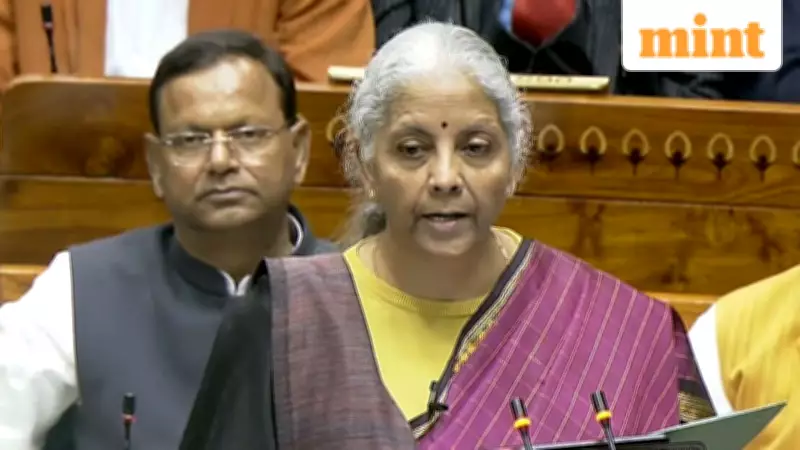
In a significant announcement during the presentation of the Union Budget 2026-27, Finance Minister Nirmala Sitharaman revealed a comprehensive restructuring of the taxation framework governing share buybacks. The government has decided to tax buyback proceeds for all categories of shareholders as capital gains, fundamentally altering the previous regulatory approach that had been in effect since October 1, 2024.
From Deemed Dividend to Capital Gains: A Paradigm Shift
Under the earlier regime, all amounts received by shareholders from a company's buyback initiative were classified as a "deemed dividend" and subjected to taxation according to the individual's applicable income tax slab rates. This treatment has now been officially reversed, with buyback proceeds returning to their original classification as capital gains transactions.
Kunal Savani, Partner at Cyril Amarchand Mangaldas, emphasized the substantial relief this change provides to minority shareholders. "In a big relief to minority shareholders, now buyback of shares will again be taxed as capital gains tax and hence long term shares tendered in buyback will be taxed only at 12.5% as against the normal slab rate," Savani explained, highlighting the significant tax advantage for retail investors holding shares for extended periods.

Differential Taxation for Promoters Creates Complexity
While the capital gains classification benefits most shareholders, the budget introduces a distinct provision for company promoters. Finance Minister Sitharaman clarified that promoters will face an additional buyback tax, resulting in what experts describe as a substantially higher effective tax burden.
Savani elaborated on this differential treatment, noting that "this initiative could create complications for promoters, as they will have to pay additional tax on such a buyback, resulting in an effective tax rate of 30% plus surcharge." He further observed the inherent contradiction in the new framework: "Same stream of income will now be taxed differently" depending on the shareholder category.
Restoring True Character of Buyback Transactions
Rohit Jain, Managing Partner at Singhania & Co., welcomed the government's decision as a positive development for India's capital markets. "Reverting the tax treatment of share buybacks from 'deemed dividends' to Capital Gains is quite positive for the retail investor," Jain stated, adding that this move effectively restores the "true character" of buybacks as capital transactions rather than profit distribution mechanisms.
Eliminating the Phantom Loss Trap for Minority Investors
One of the most significant benefits for minority shareholders, according to Jain, is the elimination of the problematic "phantom loss" trap. Under the previous deemed dividend classification, investors faced tax liabilities on investment gains that were allocated but never actually received in cash, while simultaneously being unable to offset acquisition costs against dividend income.
Jain explained that this structural flaw has now been addressed through the capital gains reclassification. "This move translates into higher post-tax returns and reinforces India's position as a mature, investor-aligned capital market," he affirmed, suggesting that the reform enhances India's attractiveness as an investment destination.
Broader Implications for India's Investment Landscape
The Union Budget 2026-27's buyback taxation reform represents more than just a technical adjustment to tax codes. This strategic shift signals the government's commitment to creating a more equitable and transparent investment environment that distinguishes between different types of shareholders while protecting the interests of retail participants.
By returning to capital gains taxation for buybacks, the government acknowledges the fundamental nature of these transactions as capital restructuring events rather than income distribution mechanisms. This clarification provides much-needed certainty for investors and companies alike as they navigate India's evolving financial landscape.






