

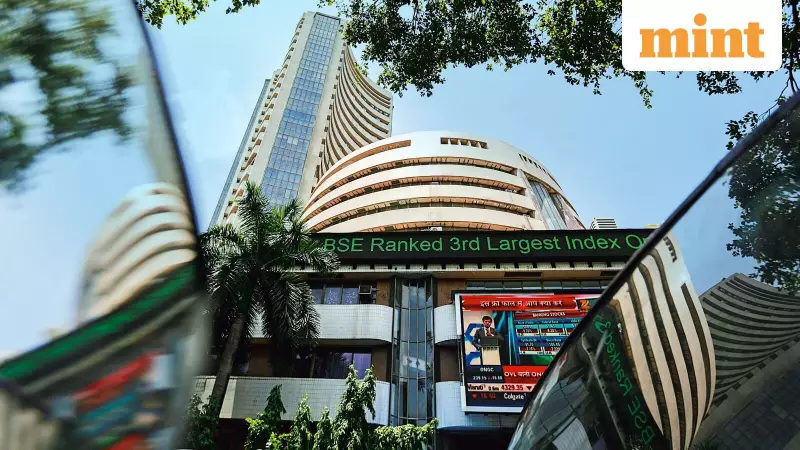
The Fading Fireworks: How Budget Day Lost Its Market Spark
Once considered the single most significant policy trigger for Indian equity markets, the Union Budget has gradually transformed into a relatively muted affair in recent years. This subdued reaction on Budget Day reflects a profound structural shift in India's economic governance framework. Policymaking has evolved to become more continuous, predictable, and front-loaded, compelling investors to position themselves strategically weeks or even months in advance rather than reacting impulsively to a single parliamentary speech.
The Era of Continuous Reforms
With crucial reforms, sector-specific incentives, and major policy measures now being rolled out consistently throughout the year via cabinet decisions, press releases, special economic packages, and GST Council meetings, the traditional element of surprise associated with Budget Day has largely evaporated. Market experts unanimously agree that this transformation has fundamentally altered investor behavior and market dynamics.
Market volatility surrounding the annual budget event has noticeably declined, expectations have become more measured and realistic, and investors are increasingly concentrating on medium-term policy direction rather than one-day announcements. The finance ministry is scheduled to present the FY27 Budget on 1 February 2026, at a time when the government appears reasonably positioned to meet its fiscal deficit target of 4.4% of GDP, despite challenges including weak nominal GDP growth and significant reductions in personal income tax and GST rates.

"The Budget is no longer the sole 'Big Bang' event it once was," emphasized Dhiraj Relli, managing director and chief executive of HDFC Securities. "This fading surprise factor signals India's transition from event-based governance to process-led policymaking."
Front-Loaded Market Movements
A comprehensive analysis of market behavior reveals that over the past three years, Budget Day has failed to stir Indian markets in any meaningful or substantial manner. The benchmark Sensex recorded modest gains of 0.4% on Budget Day in 2023, 0.61% in 2024, and remained essentially flat in 2025. Longer-term data spanning sixteen years tells a remarkably consistent story, demonstrating that markets typically make their most significant moves well before Budget Day, leaving the actual budget speech with limited immediate impact.
In the crucial period leading up to the Union Budget, the Sensex has frequently experienced sharp and pronounced swings. For instance, in 2021, the index rallied an impressive 22% during the three months preceding the Budget, only to decline by 2% in the final fifteen days and remain largely muted on Budget Day itself, with a marginal movement of just 0.25%. The pattern repeated in 2022, when the Sensex fell approximately 3% in the fifteen days before the Budget, while the three-month return was a modest 0.2% and the Budget-day gain stood at merely 1.2%, strongly suggesting that market expectations had already been fully priced in.
Market participants highlight that this shift is not merely about returns but rather concerns the magnitude of market reactions, whether positive or negative. Budget Day was once typically characterized by sharp, dramatic market swings rather than the lackluster movements observed in recent years. In 2020, the Sensex declined 2.4% on Budget Day, while it rose 1.7% in 2017 and fell 1.5% in 2013.
Historical Patterns and Investor Behavior
The same dynamic has been consistently visible in subsequent years. In 2023, the Sensex delivered negative returns both during the three months preceding the Budget (-2.3%) and in the final fifteen days (-1%), before edging up a mere 0.4% on Budget Day itself. In 2024, the index rose 9.1% over the three-month run-up and 1.2% in the last fifteen days, followed by a limited 0.6% gain on the actual announcement day.
By 2025, this front-loading of market movements became even more pronounced and evident. The Sensex fell 2.8% in the three months preceding the Budget, then rose 1.3% in the final fifteen days. The reaction on Budget Day itself was largely flat, clearly underscoring how policy expectations are increasingly absorbed and priced in well before the finance minister's speech.

Essentially, instead of reacting sharply and dramatically on Budget Day, investors now tend to position themselves strategically in advance. Consequently, the period leading up to the Budget has become far more significant for market direction than the actual announcement. Since 2010, the three months before the Union Budget have consistently been marked by elevated volatility in the Sensex. In nearly half of these years, specifically eight in total, the benchmark index has declined during this pre-Budget phase, reflecting rising uncertainty as investors attempt to price in policy signals and fiscal priorities ahead of time.
This front-loaded behavior remains visible even over shorter timeframes. In the fifteen days leading up to the Budget, the Sensex has fallen in eight of the past sixteen years, including 2014, 2016, 2020, 2021, 2022, and 2024, suggesting that caution and apprehension often build momentum just ahead of the event.
"If you are a long-term investor, Budget Day has historically been a poor day to 'time' the market," Relli further noted. "Lower volatility is a sign of a maturing market where the roadmap is clear, reforms are continuous, and the 'noise' of a single day is finally being replaced by the 'signal' of long-term growth."
So far in the approximately two months preceding the FY27 Budget, the Sensex has declined over 4%, indicating that markets have already adjusted and priced in numerous Budget expectations even before the speech, aligning perfectly with historical pre-Budget trends.
Budget's Enduring Sectoral Influence
Despite its diminished immediate market impact, market participants emphasize that the Budget continues to influence which sectors lead market performance throughout the year. For example, the 2025 focus on consumption stimulated rallies in fast-moving consumer goods (FMCG) and automobile stocks, while the defence sector witnessed profit-booking, according to some analysts.
The prevailing consensus suggests that the upcoming Budget will likely ramp up capital expenditure on infrastructure, defence, and railways to buffer the economy, with particular emphasis on higher defence outlays. Industry bodies are actively seeking government support for MSMEs, manufacturing, green energy, artificial intelligence (AI), and exports. However, Budget Day volatility could potentially spike if stimulus measures fall short of expectations or if fiscal discipline appears to slip, risking higher bond yields and tighter liquidity conditions, cautioned several market experts.
While increased development spending and capital expenditure are generally positive for markets, they may not be sufficient to arrest earnings downgrades, as margins are expected to normalize and external risks remain elevated, highlighted a January report by Nuvama Institutional Equities. "Hence, unless there is a larger growth impulse, defensive bias is warranted," the report stated, adding, "Tweaks on capital gains taxes could sway sentiments in the near term."
Economic Context and Future Outlook
Kotak Institutional Equities noted in its 16 January report that while equities might experience disappointment due to the absence of big-ticket measures or substantial spending announcements, the bond market may also turn cautious over a likely increase in market borrowings. "India's current economic backdrop, shaped by geopolitical tensions and trade uncertainty, warrants a steady, growth-supportive stance in the FY2027 Union Budget," the brokerage firm observed.
The brokerage has projected FY27 GDP growth at 4.3%, factoring in a slower pace of fiscal consolidation, sustained capital expenditure—particularly in defence and loans to states—and modest tax buoyancy aided by a substantial RBI surplus. It further added that government borrowing is likely to remain elevated, with heavy redemptions exerting upward pressure on the yield curve.
BofA Securities stated in a 14 January report, "The Ministry of Finance is on track to hit its medium-term fiscal target of below 4.5% of GDP it had set in 2021 for the fiscal deficit and is going to pivot to a debt sustainability framework from FY27, targeting 55% of central debt to GDP, down from an estimated 56.1% of debt in FY26."
According to Madhavi Arora, chief economist at Emkay Global Financial Services, the Budget will be closely monitored for crucial signals regarding the trajectory of bond yields, the government's approach to fiscal consolidation, and both the pace and quality of capital expenditure allocations. Equally important will be steps taken to streamline the tax regime for foreign investors and enhance India's overall investment appeal in the global economic landscape.





